
Every coordinator, research nurse and investigator on a clinical trial has a training record. They've completed Good Clinical Practice (GCP) courses, sat through the site initiation visit and signed off on the protocol. Yet in its fiscal year 2024 inspection summary, FDA listed adverse event reporting and informed consent among the common observations on Form FDA 483s issued to clinical investigators [1]. A missed event can start with a question that never gets asked. A participant can hear about a new risk and still be unsure what it means for them. Both are situations a site team can rehearse before the next visit.
What follows looks at what standard training checks and what it leaves out, three conversations worth practicing, what readiness data can and can't tell us, and where virtual human simulation fits. It ends with first steps for a site or sponsor.
Where Readiness Breaks Down
What training checks, and what it doesn't
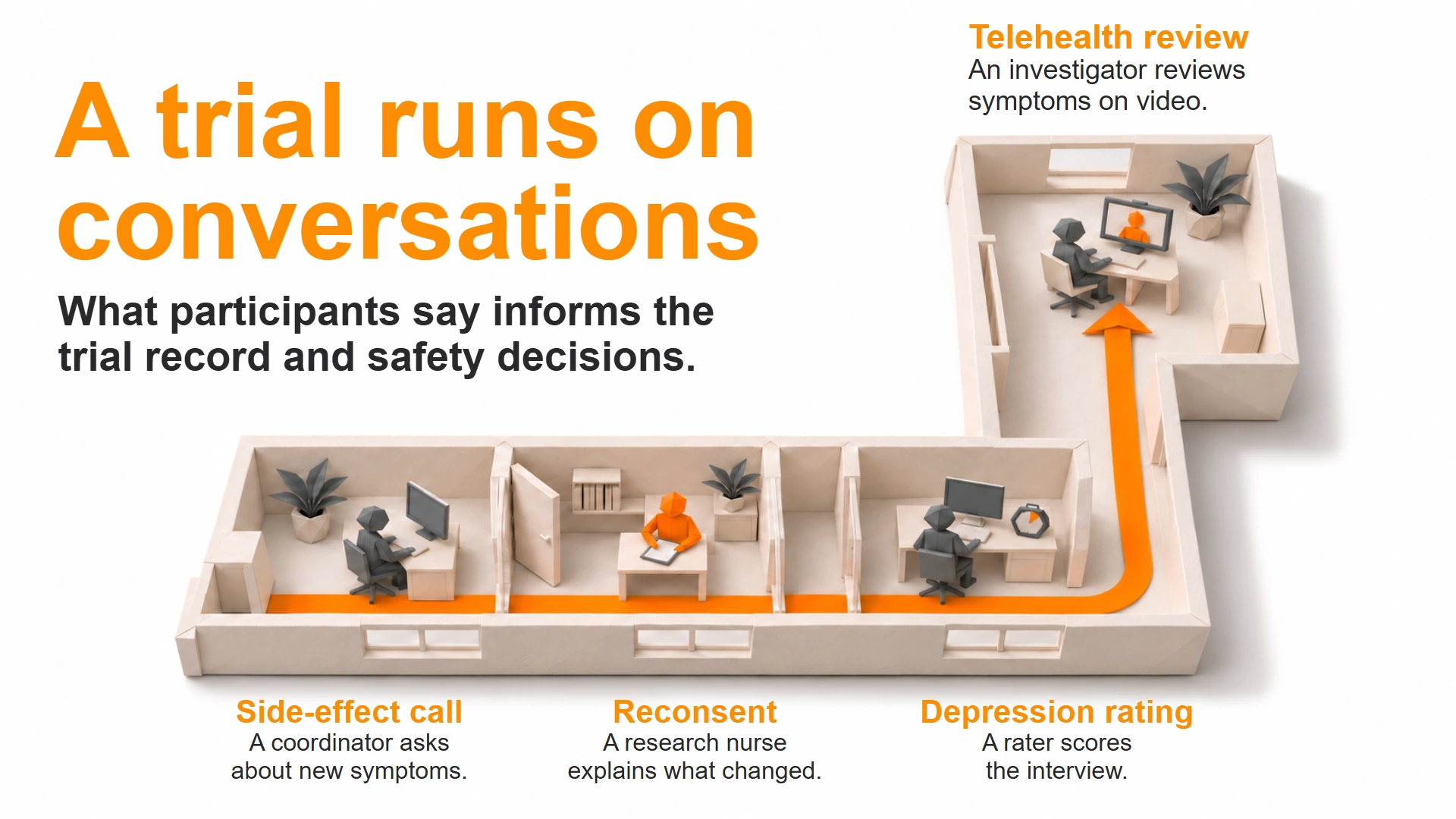
Once a participant enrolls, much of the trial runs on conversations. A coordinator calls to check on side effects. A research nurse reconsents after an amendment. A rater scores a depression scale. An investigator reviews symptoms over telehealth. Each conversation produces either trial data or a safety decision, and each depends on one person asking well and listening closely.
Most of the training around these moments certifies knowledge. Under TransCelerate's voluntary mutual recognition program, participating companies accept each other's GCP certificates when a course meets shared minimum criteria, including retraining every three years. When those criteria were presented in 2021, competency assessment wasn't one of them [2]. Inspections sit at the other end and look at outcomes. FDA's report covers 609 clinical investigator inspections but doesn't say how often each problem occurred or why [1]. A Tufts analysis of 187 protocols found phase 3 trials averaged 119 deviations, linked to more sites and more complex protocols; the study didn't measure communication [3].
So training checks what staff know, and inspections check what went wrong. Almost nothing in between watches a staff member handle a hard conversation and gives feedback.

A hypothetical week-six visit
Picture a coordinator named Dana running a telehealth check-in with a participant in a blood pressure trial. Mr. Reyes is 58 years old, friendly and in a hurry. Dana asks, "Any problems since your last visit?" He says, "No, I'm doing fine." Dana confirms his next appointment and closes the visit. What Dana didn't learn is that Mr. Reyes started a turmeric supplement two weeks ago and has had two dizzy spells getting out of bed. He didn't think they mattered. If Dana had asked, he might even have said, "Don't write that down, I don't want to get kicked out of the study." Dana has every certificate the sponsor requires. She's never practiced a visit where the participant holds something back.
Three Conversations Worth Practicing
Adverse events depend on how you ask
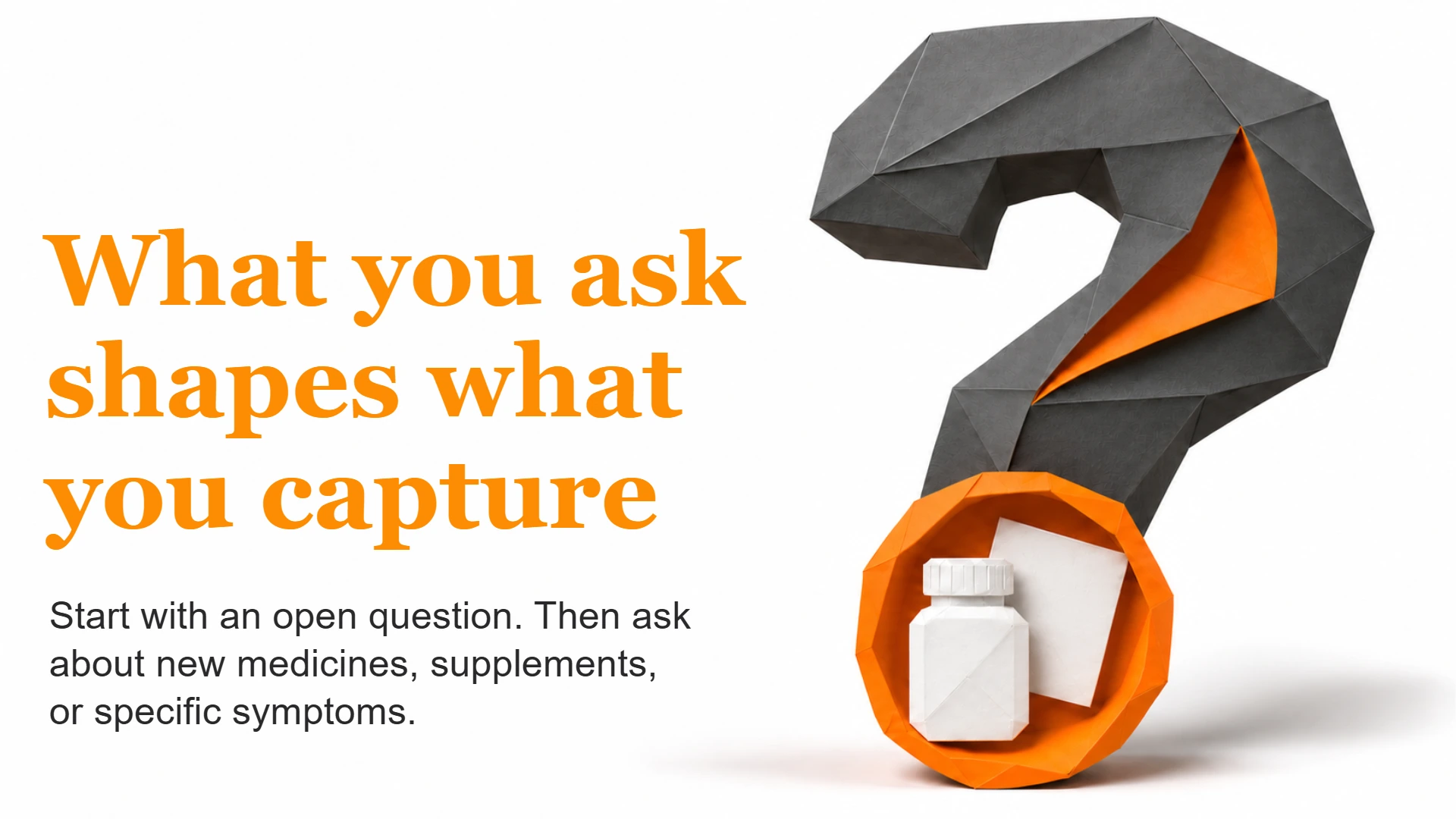
The way staff ask about side effects changes what gets reported. In one placebo run-in, 14% of men reported a side effect when asked a single open question in writing, and 77% did when given a checklist [4]. A Cochrane review of 33 studies found the same direction, and added a useful twist: open questions asked first tended to surface the symptoms that bothered people most, and some severe effects appeared only in interviews [5]. In three cancer trials, physicians didn't record symptoms that patients themselves reported 40.7% to 74.4% of the time [6].
None of these studies measured a live coordinator's skill directly. Together, though, they point to a clear conclusion. Adverse event data is partly a product of the question asked. If two coordinators ask differently, the trial collects different safety data from similar participants. That makes elicitation a skill worth standardizing: open questions first, then specific follow-up on medicines, supplements and symptoms, with enough rapport that people say what's really going on.
Consent doesn't end at the signature
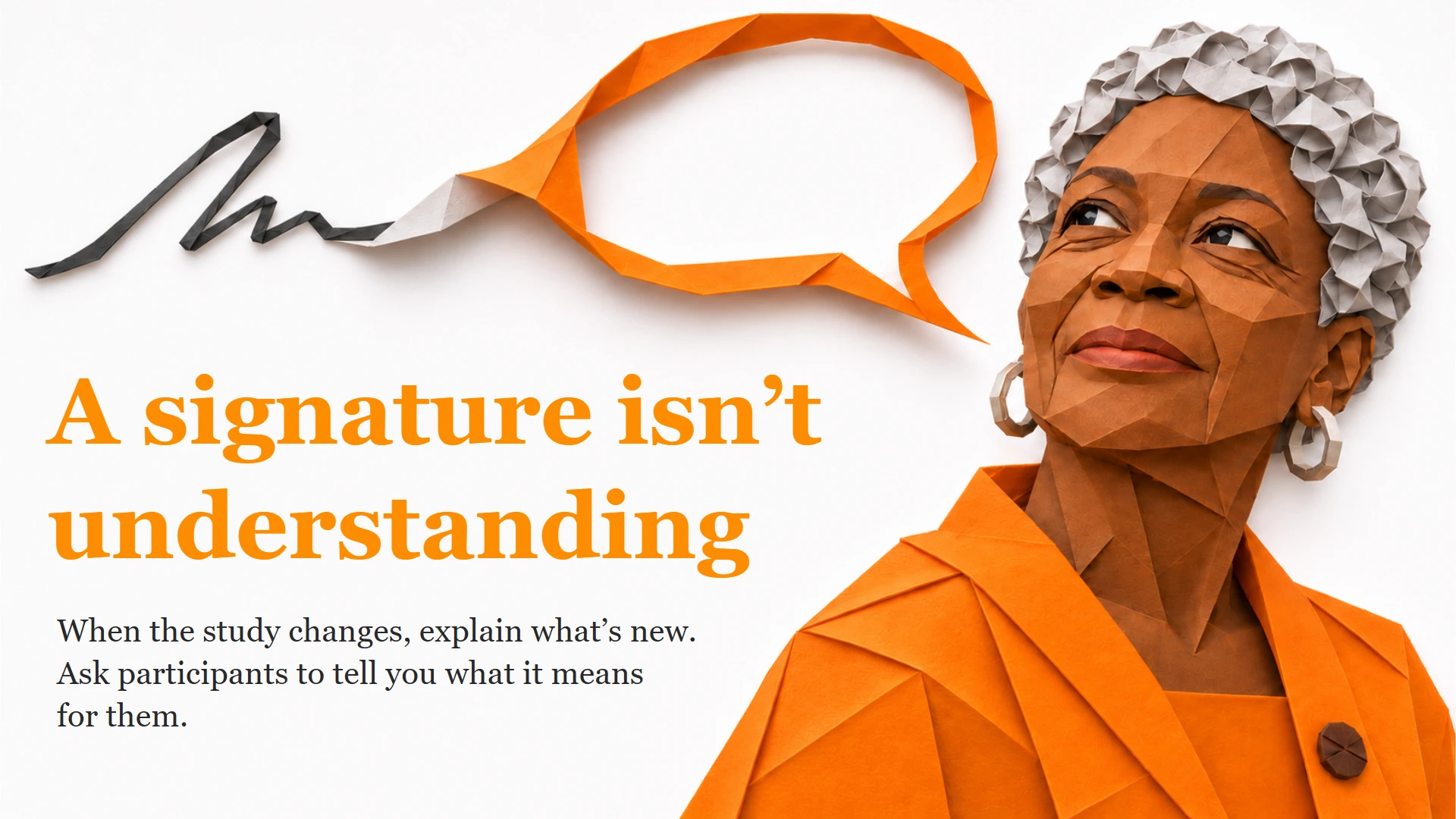
ICH E6(R3), final in the US since September 2025, asks sites to tell participants promptly about new information that could affect their willingness to continue, and to assess whether reconsent is needed [7]. Those moments come often. A Tufts study of 950 protocols found 76% had at least one amendment [8].
Each update reaches a participant whose first consent may not have stuck. A review of 103 studies found only about half of trial participants understood randomization or placebo, with no overall gain over three decades [9]. One approach that improved understanding wasn't a better form. It was more one-on-one discussion with a study team member [10]. Understanding depends on the person explaining, which means it can improve with practice. A coordinator who has rehearsed explaining a new liver risk, checked understanding by asking the participant to say it back, and handled a participant who gets upset is better prepared than one who has only read the form aloud.
Rating scales are conversations too
In many trials, the primary endpoint comes from a clinician interview. When an expert reviewed 104 recorded depression interviews from two industry trials, 39% took 10 minutes or less, and most were rated fair or unsatisfactory [11]. The authors called for rater training to include interview skills, not just scoring rules. That recommendation matters because the endpoint is only as good as the interview behind it. Scoring rules can be taught on slides. Neutral follow-up questions, and knowing when a vague answer needs one more probe, have to be practiced out loud.
What Readiness Data Can and Can't Tell Us
Feeling ready and testing ready
In ACRP's 2025 survey, 90% of research professionals said they were confident they understood their responsibilities [12]. In a separate 2026 industry simulation, 42 coordinators reviewing a hypothetical study's records found 45% of the seeded problems on average, and those with less than a year of experience found 27% [13]. These are different people and different tasks, and the simulation tested record review, not conversation. They don't prove that confident staff perform poorly.
What they do show is that self-ratings and measured performance answer different questions. A site that only asks staff how ready they feel won't know how ready they are. Readiness has to be observed, ideally in the specific conversations a protocol will demand, before a real participant is on the other end.
A stretched workforce
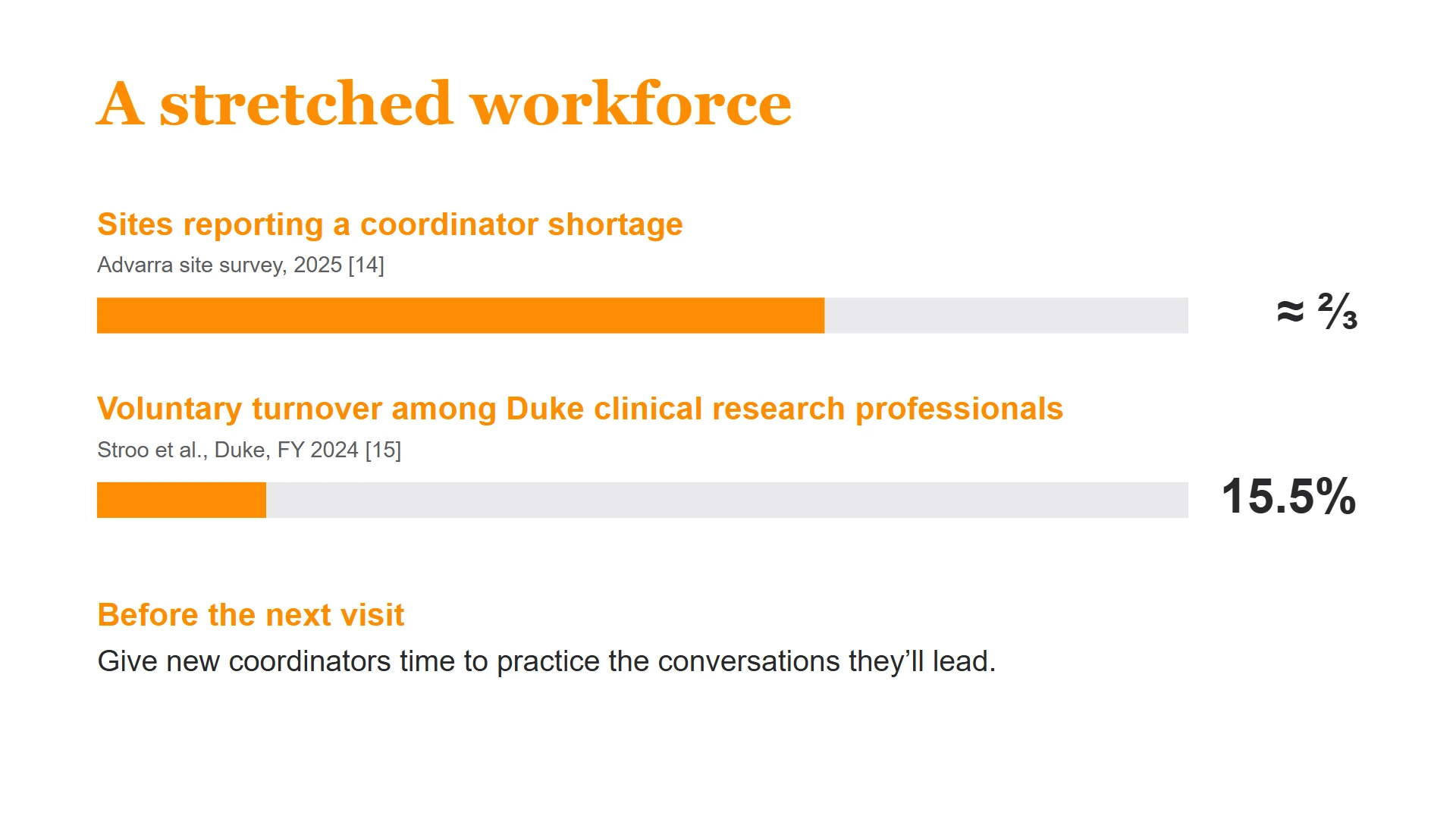
About two-thirds of sites in Advarra's 2025 survey reported a coordinator shortage [14], and a Duke study found 15.5% voluntary turnover among clinical research professionals in fiscal 2024 [15]. The practical effect is that sites are always onboarding. Training that depends on a senior colleague's time or a scheduled actor doesn't scale to that pace, and the newest staff, who need the most practice, often get the least. The question for a site shifts from whether someone finished the course to whether they can handle next week's visits.
Where Virtual Humans Fit
Practicing the visit before the visit
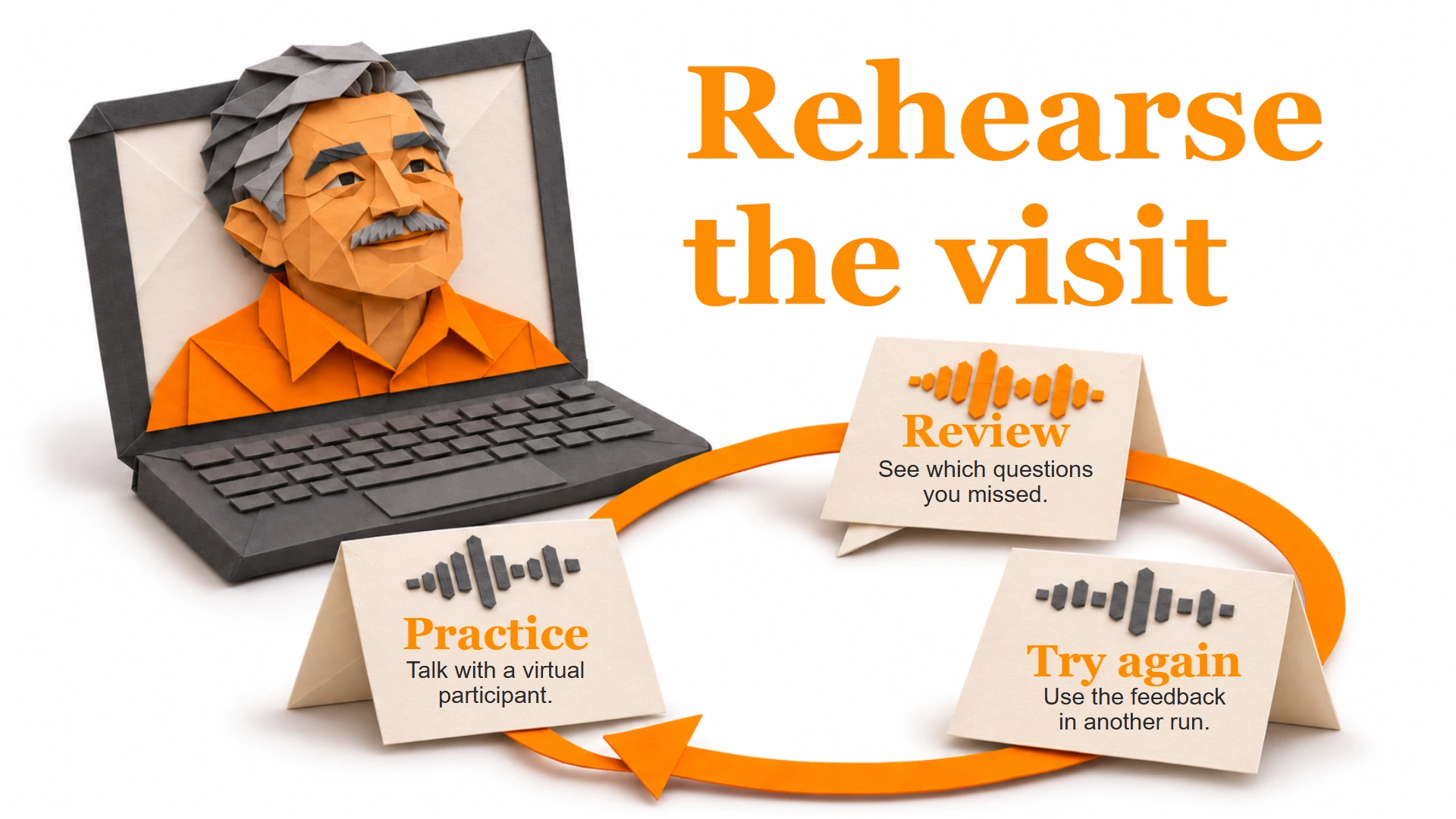
Virtual human simulation gives staff a place to rehearse these conversations before they have them with real participants. Dana can open a scenario on a laptop or phone and talk out loud with a virtual participant built from the actual protocol: one who downplays symptoms, one who needs reconsent after an amendment, one who wants to withdraw. Afterward, the virtual human system reviews the transcript against the educator's rubric. Did she ask about supplements? Did she explain why she can't leave something out of the record? She gets a score, examples from the conversation and another try that afternoon. The site gets a record of how each person performed in the simulation, not just a completion certificate.
What the evidence shows
The principle behind this has support. Communication training improves some clinician behaviors in oncology, with stronger evidence for empathy than for open questions [16]. Individualized training improved how physicians discussed trials with actor-patients [17]. Tufts has run coordinator consent training with community members playing participants [18], and one research network used study-specific simulation with a pass/fail checklist before enrollment [19]. What these programs share is practice plus feedback, and what limits them is cost and scheduling.
AI virtual patients address that limit, and 2026 brought the first randomized results. In one trial, 51 students and clinicians who spent 30 minutes with an AI virtual patient improved more in serious illness communication than a reading group, as judged by blinded raters [20]. In another, OB-GYN residents using an AI virtual patient platform scored higher on communication after one month [21]. A year-long trial in UK medical students found no statistically significant difference between groups, though students' motivation and engagement predicted how much they improved [22]. The early pattern is encouraging for short, focused practice with clear feedback, and a reminder that access to a tool isn't the same as a practice routine built around specific skills.
What it hasn't shown yet
These studies measured performance in training or simulated encounters. Whether virtual participant practice reduces missed adverse events or consent findings at trial sites is still an open question. Sites and sponsors already track those outcomes, so they're well placed to find out.
Where to Start
Find, practice, measure
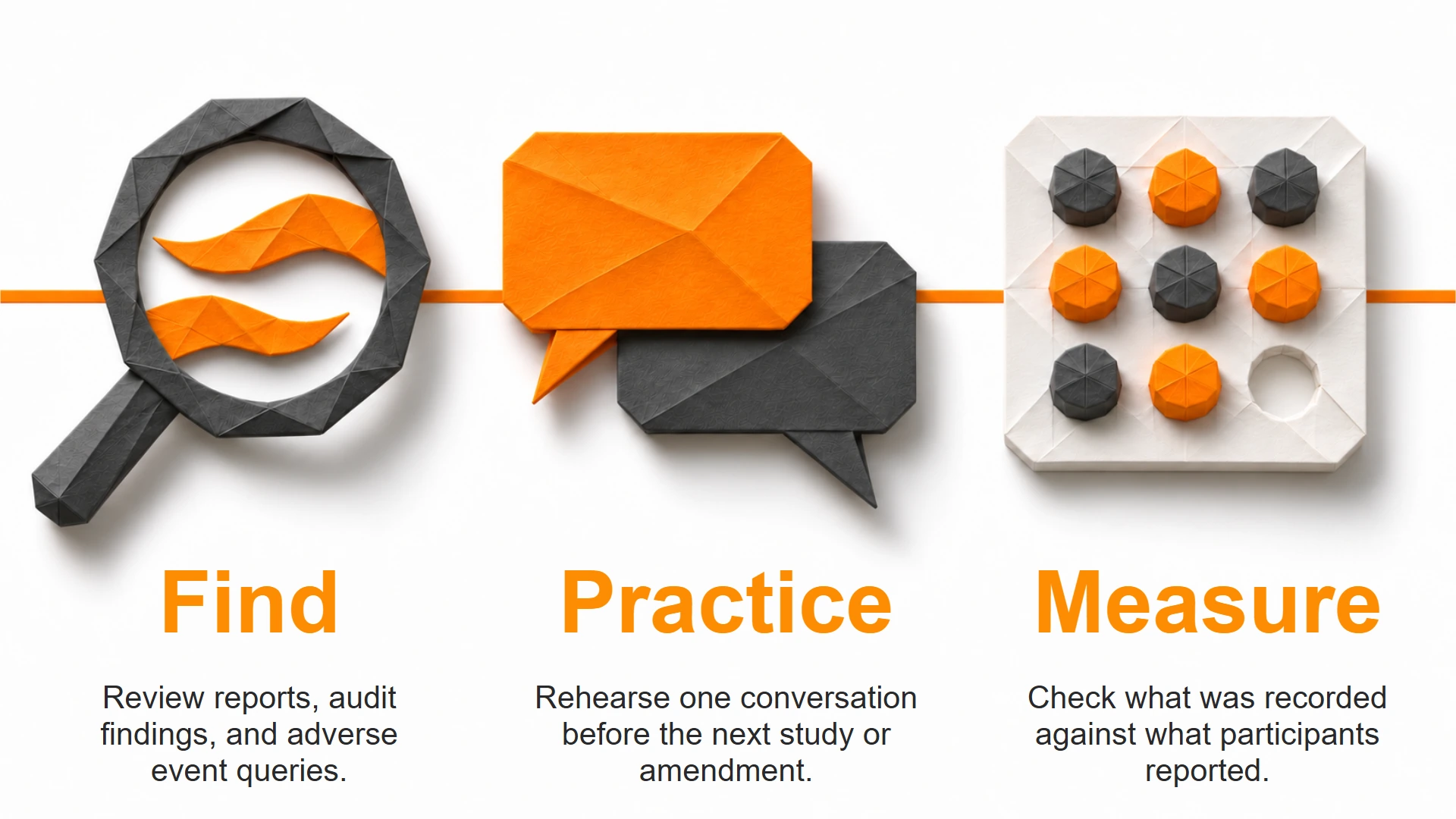
Pull a year of monitoring reports, audit findings and adverse event queries, and look for problems that may involve a conversation. Pick one and write down what a strong version sounds like, including the exact questions staff should ask. Have staff practice it before the next study starts or amendment rolls out, with new coordinators getting the most repetition. Then measure in terms your monitors already use: consent findings, interview quality ratings, and adverse event queries checked against whether events were captured correctly. A site that starts finding more events may see queries rise at first, which can mean more events are being captured, not fewer.
Dana, one month later
Dana has practiced the week-six check-in a few times, and her feedback kept flagging the same habit: one open question, then on to scheduling. This time she asks Mr. Reyes how he's been feeling, then whether he's started any new medicines or supplements, then whether he's had any dizziness. He mentions the turmeric and the dizzy spells. When he asks her not to write it down, she explains why she has to and that the study team will work out what's safe for him. Then she calls the investigator.
References
- US Food and Drug Administration. Bioresearch Monitoring (BIMO) Fiscal Year 2024 Metrics. https://www.fda.gov/media/192870/download
- TransCelerate BioPharma. Mutual recognition of GCP training. Presentation at Clinical Trials Transformation Initiative GCP meeting; 2021. https://ctti-clinicaltrials.org/wp-content/uploads/2021/07/CTTI_GCP_Meeting_Jacobsen.pdf
- Getz K, Smith Z, Jain A, Krauss R. Benchmarking protocol deviations and their variation by major disease categories. Ther Innov Regul Sci. 2022;56(4):632-636. doi:10.1007/s43441-022-00401-4. https://doi.org/10.1007/s43441-022-00401-4
- Bent S, Padula A, Avins AL. Brief communication: better ways to question patients about adverse medical events: a randomized, controlled trial. Ann Intern Med. 2006;144(4):257-261. doi:10.7326/0003-4819-144-4-200602210-00007. https://doi.org/10.7326/0003-4819-144-4-200602210-00007
- Allen EN, Chandler CI, Mandimika N, Leisegang C, Barnes K. Eliciting adverse effects data from participants in clinical trials. Cochrane Database Syst Rev. 2018;1:MR000039. doi:10.1002/14651858.MR000039.pub2. https://doi.org/10.1002/14651858.MR000039.pub2
- Di Maio M, Gallo C, Leighl NB, et al. Symptomatic toxicities experienced during anticancer treatment: agreement between patient and physician reporting in three randomized trials. J Clin Oncol. 2015;33(8):910-915. doi:10.1200/JCO.2014.57.9334. https://doi.org/10.1200/JCO.2014.57.9334
- US Food and Drug Administration. E6(R3) Good Clinical Practice: Guidance for Industry. September 2025. https://www.fda.gov/regulatory-information/search-fda-guidance-documents/e6r3-good-clinical-practice-gcp
- Getz K, Smith Z, Botto E, Murphy E, Dauchy A. New benchmarks on protocol amendment practices, trends and their impact on clinical trial performance. Ther Innov Regul Sci. 2024;58(3):539-548. doi:10.1007/s43441-024-00622-9. https://doi.org/10.1007/s43441-024-00622-9
- Tam NT, Huy NT, Thoa LTB, et al. Participants' understanding of informed consent in clinical trials over three decades: systematic review and meta-analysis. Bull World Health Organ. 2015;93(3):186-198H. doi:10.2471/BLT.14.141390. https://doi.org/10.2471/BLT.14.141390
- Flory J, Emanuel E. Interventions to improve research participants' understanding in informed consent for research: a systematic review. JAMA. 2004;292(13):1593-1601. doi:10.1001/jama.292.13.1593. https://doi.org/10.1001/jama.292.13.1593
- Engelhardt N, Feiger AD, Cogger KO, et al. Rating the raters: assessing the quality of Hamilton rating scale for depression clinical interviews in two industry-sponsored clinical drug trials. J Clin Psychopharmacol. 2006;26(1):71-74. doi:10.1097/01.jcp.0000194621.61868.7c. https://doi.org/10.1097/01.jcp.0000194621.61868.7c
- Association of Clinical Research Professionals. ACRP publishes results from first-ever national workforce survey. September 24, 2025. https://acrpnet.org/2025/09/24/acrp-publishes-results-from-first-ever-national-workforce-survey
- Goldfarb NM. An objective study of clinical research coordinator work quality. Applied Clinical Trials. May 28, 2026. https://www.appliedclinicaltrialsonline.com/view/objective-study-clinical-research-coordinator-work-quality
- Advarra. The State of Workforce Development: 2025 Survey Report. 2025. https://resource.advarra.com/hubfs/eBook/Advarra%20Workforce%20Development%20Survey%20Report%20EB.pdf
- Stroo M, Reyes C, Deeter C, et al. Trends in turnover and turbulence at a large academic medical center before and during COVID-19: analyzing structured clinical research professional roles. J Clin Transl Sci. 2025;9(1):e134. doi:10.1017/cts.2025.10063. https://doi.org/10.1017/cts.2025.10063
- Moore PM, Rivera S, Bravo-Soto GA, Olivares C, Lawrie TA. Communication skills training for healthcare professionals working with people who have cancer. Cochrane Database Syst Rev. 2018;7:CD003751. doi:10.1002/14651858.CD003751.pub4. https://doi.org/10.1002/14651858.CD003751.pub4
- Wuensch A, Goelz T, Ihorst G, et al. Effect of individualized communication skills training on physicians' discussion of clinical trials in oncology: results from a randomized controlled trial. BMC Cancer. 2017;17(1):264. doi:10.1186/s12885-017-3238-0. https://doi.org/10.1186/s12885-017-3238-0
- Markman KM, Weicker NP, Klein AK, Sege R. Community-engaged training in informed consent. J Clin Transl Sci. 2023;7(1):e108. doi:10.1017/cts.2023.534. https://doi.org/10.1017/cts.2023.534
- Fritter J, Metheney M, Zuspan SJ. Impact of a risk-based, study-specific training program on research coordinator competency. Clinical Researcher (ACRP). June 2020;34(6). https://acrpnet.org/2020/06/impact-of-a-risk-based-study-specific-training-program-on-research-coordinator-competency
- Haut KG, Hasan M, Carroll T, Epstein RM, Sen T, Hoque E. Effects of a generative AI virtual patient on serious illness communication skills: randomized controlled trial. JMIR Med Educ. 2026;12:e93034. doi:10.2196/93034. https://doi.org/10.2196/93034
- Yan C, Li X, Chen X, et al. Artificial intelligence-enhanced colposcopy training improves diagnostic reasoning and communication competencies: a randomized controlled study. J Gynecol Obstet Hum Reprod. 2026;55(10):103307. doi:10.1016/j.jogoh.2026.103307. https://doi.org/10.1016/j.jogoh.2026.103307
- Wang X, Duggal S, Hughes A, Murad S, O'Malley A. Evaluating an AI-powered patient simulator for communication skills training: one-year randomized controlled trial. J Med Internet Res. 2026;28:e91886. doi:10.2196/91886. https://doi.org/10.2196/91886