
Many hospitals teach SBAR. It stands for Situation, Background, Assessment, and Recommendation, and it gives nurses, pharmacists, therapists, and residents a simple order for calling a doctor about a patient who's getting worse: what's happening, the backstory, what you think is wrong, and what you need. Using it well in a classroom doesn't mean using it well on a real unit at 2 a.m. A 2021 review of 28 reports found that the big gains in how faithfully people used SBAR came mostly from classroom studies, and the five studies that checked this on real units found smaller gains [1].
Other research finds communication failures in malpractice claims, test result follow-up, and teamwork in the operating room. Several programs that worked paired a simple structure with training, observation, and feedback. Some failures are system problems that no training will fix. For the ones that come down to skill, virtual human simulation lets clinicians practice out loud with a computer-generated patient or colleague, get feedback, and try again. Early studies are encouraging, but they don't show that this practice reduces harm in real care. So it belongs inside a quality improvement program, where you can measure whether it helps.
Communication Failures Are Safety Failures
What the claims show
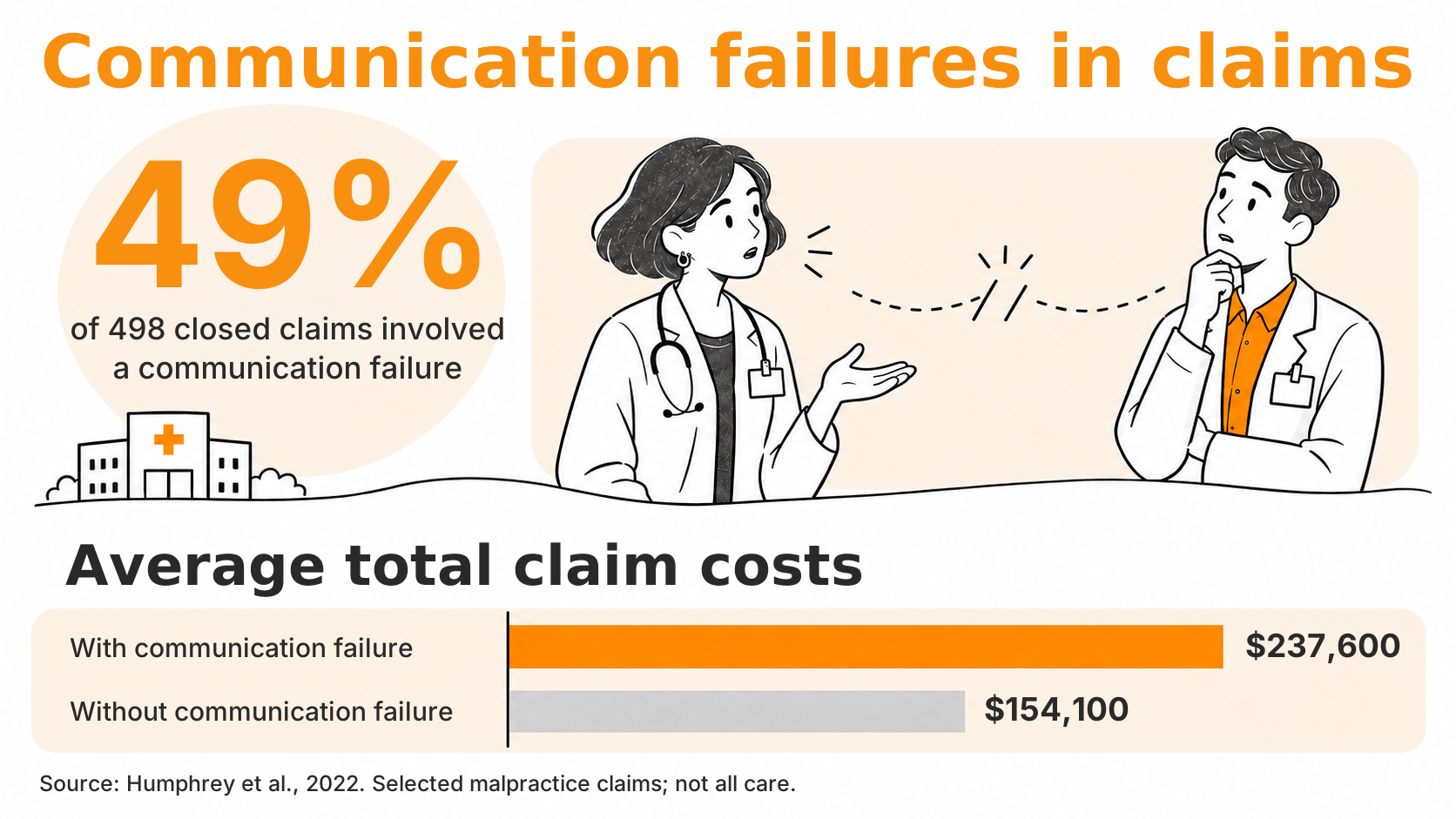
Start with malpractice claims. When researchers reviewed 498 closed claims from a national database covering 2001 to 2011, they found a communication failure in 49% of them [2]. About 53% of those failures were between clinicians and patients, and 47% were between clinicians [2]. Failed handoffs made up 40% of all the communication failures [2]. Looking back, the reviewers judged that a structured handoff tool might have prevented 77% of those handoff failures, though the study didn't test whether it would [2]. Claims with a communication failure also had higher average total costs, about $237,600 compared with $154,100, and they were less likely to be dropped, denied, or dismissed [2]. Claims capture only a selected slice of harm, so they can't tell you how often these failures happen across all care. But they show where things break.
Where things break
Other studies find the same weak spots. In a study of 23 primary care practices, 7.1% of clinically important abnormal test results showed an apparent failure either to tell the patient or to record that the patient was told [3]. In a six-hospital pilot study, communication errors were found in 52.4% of reported adverse events involving patients with limited English, compared with 35.9% involving English-speaking patients [4]. In a 2004 study of 48 surgeries, observers classified 129 of 421 team exchanges as communication failures, and about a third of those had visible effects such as delays, wasted effort, or tension on the team [5]. Those were effects on the work, not patient injuries. You can't add these numbers together, because each study counted something different. What they share is a short list of trouble spots: handoffs, escalation, test results, and language barriers.
Money and accreditation
Medicare and the Joint Commission both pay attention to these problems. For fiscal 2027, 2,334 of the 2,912 hospitals in Medicare's readmissions program, about 80%, had some of their Medicare inpatient payments cut for having more readmissions than expected [6]. Readmissions have many causes, and those penalties don't show that poor communication caused them. In January 2026, the Joint Commission reorganized existing requirements into new National Performance Goals for hospitals. They include timely reporting of critical results and a handoff process that lets the person giving information and the person receiving it talk it through [7].
A Hypothetical Night Shift
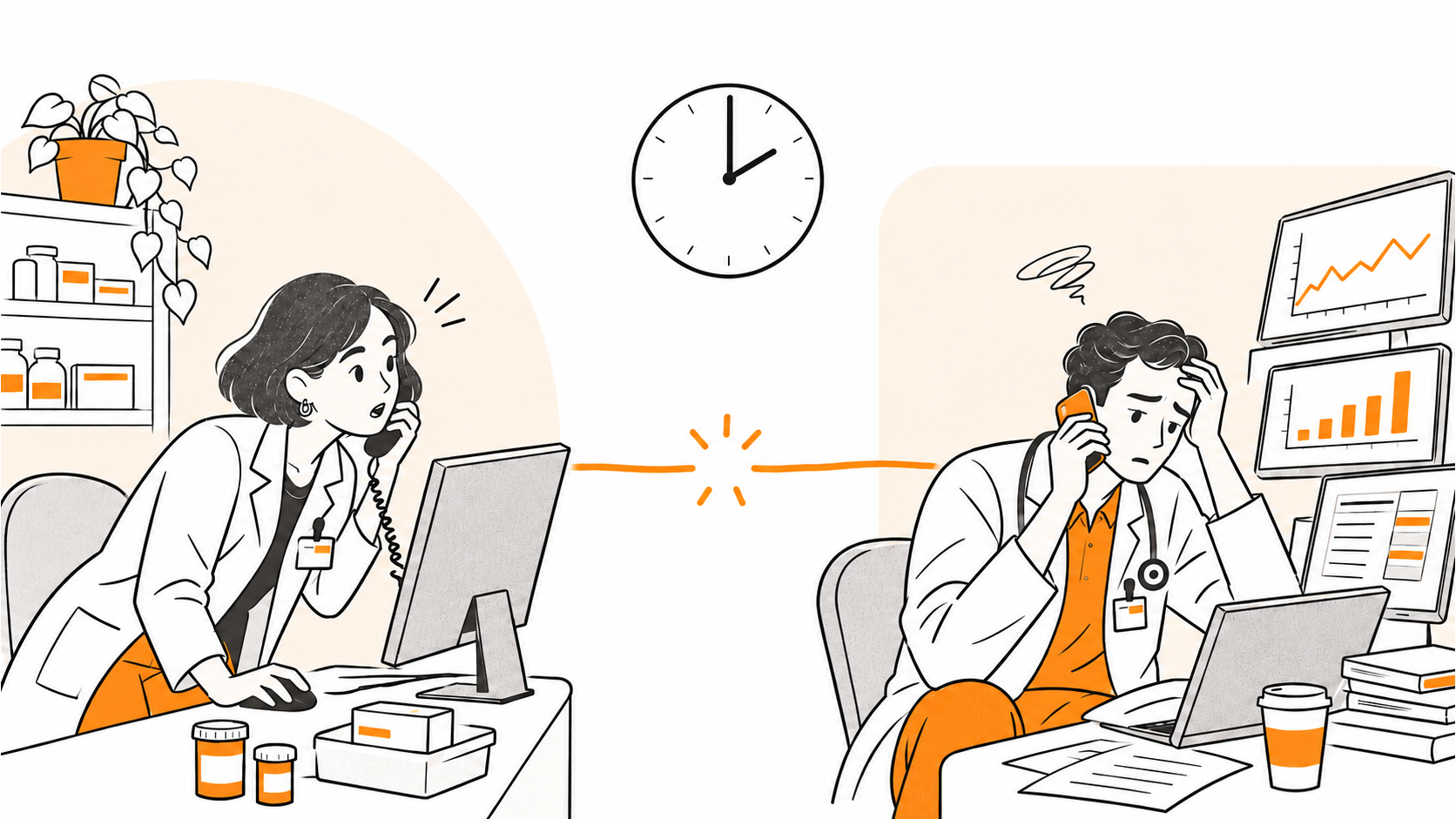
Picture a hospital pharmacist named Jordan. She's eight months into her first job, and it's 2 a.m. While checking orders, she sees that a patient's kidney function has dropped since yesterday, but the dose of a blood thinner hasn't changed. She pages the covering resident. He's handling 40 patients and sounds rushed, and he says it's probably fine and the day team can look at it. Jordan learned SBAR in training and passed every check. But in the moment, she never says what she's worried about or what she wants him to do, and she doesn't ask him to confirm a plan. She writes a note in the chart and hopes someone reads it.
The Tools Exist. Using Them Under Pressure Is the Hard Part.
SBAR in class and on the unit
SBAR was built for calls like Jordan's. But as the 2021 review showed, strong results in the classroom didn't carry over fully to real units [1]. Where patient outcomes improved, SBAR was usually one part of a bigger program that also included things like early warning scores and rapid response teams, so it's hard to say how much SBAR itself helped [1]. Knowing SBAR is like knowing Spanish from a textbook. You can know every rule and still freeze when someone answers fast and impatient. And even said well, SBAR can't make the person on the other end act.
What I-PASS did differently
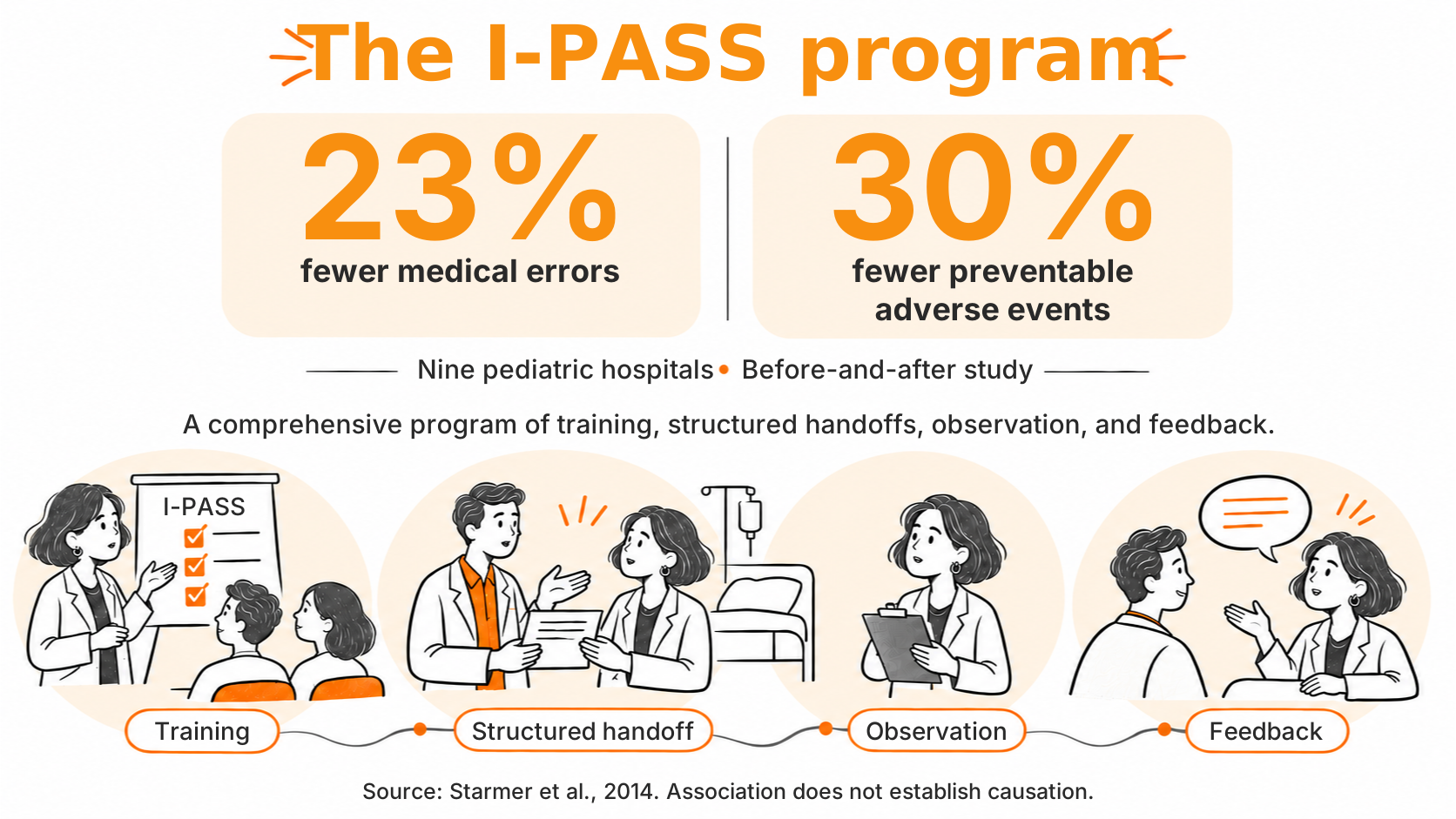
I-PASS, a structured handoff program, is the best-known case of a communication program linked to better outcomes. In a before-and-after study of 10,740 admissions at nine pediatric hospitals, medical errors fell 23% and preventable adverse events fell 30% after I-PASS started, and handoffs didn't take meaningfully longer [8]. It wasn't a randomized trial, so it shows a strong link rather than proof. I-PASS was also more than a memory aid. Teams got training, a standard format for written and spoken handoffs, faculty who watched handoffs and gave feedback, and a campaign to keep it going [8]. A later study brought I-PASS to 32 hospitals, with 18 months of coaching and monthly reviews of handoff data [9]. Resident-reported handoff-related adverse events fell about 47%, and observed spoken handoffs that included all five I-PASS parts rose from 20% to 66% [9]. Those event counts came from residents' own reports, which is weaker evidence than chart review. Both studies tested a full, supported program, not the memory aid alone, and neither can say which part did the most good.
Teach-back and huddles
Some popular tools have less proof behind them than you might think. Teach-back means asking patients to explain the plan in their own words, instead of asking, "Any questions?" A 2026 review of 18 randomized trials of teach-back used in a single visit found no consistent gain in what patients knew [10]. Pooled results pointed to better confidence and better self-reported short-term adherence, but the certainty of that evidence was low to very low [10]. Physician safety huddles, which are short, regular team check-ins about current risks, have stronger support. In a stepped-wedge randomized trial in oncology, surgery, and rehabilitation programs at four academic hospitals in Toronto, the adjusted rate of adverse events per 1,000 patient-days was 12% lower with huddles [11]. That's a 12% relative drop, not 12 percentage points. With either tool, it's worth tracking how well a team carries it out, not just the outcome.
How much training it takes
A 2025 review of 14 studies found that eight programs using 5.5 to 8 hours of communication training improved some patient experience measures [12]. Separate studies found that shadow coaching helped in the short term, but the gains faded without follow-up, and one 45-minute training showed no clear benefit [12]. That doesn't set a minimum dose. It's still a reason to doubt that one short session will change much. A 2018 review found 18 studies that looked for effects of communication simulation beyond the simulation center [13]. It found some evidence that skills carried over into real care, but weak study designs limited how much anyone can conclude [13]. A course rating or a quiz score can't tell you whether someone talks differently on the unit.
Skill Problem or System Problem?
Before you train anyone, look at what's getting in the way. Some failures come down to what a person says. A clinician uses jargon, never asks what worries the patient, makes a vague request, or skips the read-back. Practice can help with those. Other failures are built into how the hospital works. A result goes to the wrong inbox, nobody owns the follow-up, there's no interpreter, or no one knows who can make the call. A 2012 review of 19 U.S. studies found missed follow-up rates that varied widely, from 6.8% to 62% for lab tests and from 1.0% to 35.7% for imaging [14]. The authors called for clear responsibility and notification processes alongside better information systems [14]. Communication practice can't replace reliable routing, tracking, and ownership of results.
Most real events mix the two. One suggested way to sort them is to pull a batch of recent safety events that mention communication. For each one, ask what got in the way: the person's skill, workload, workflow, hierarchy, how safe it felt to speak up, or unclear ownership. Usually it's more than one. Jordan's night had several. The resident was overloaded, the hospital had no clear rule for escalating dose concerns, and Jordan didn't structure her call or close the loop.
Where Virtual Humans Fit
Practice on demand
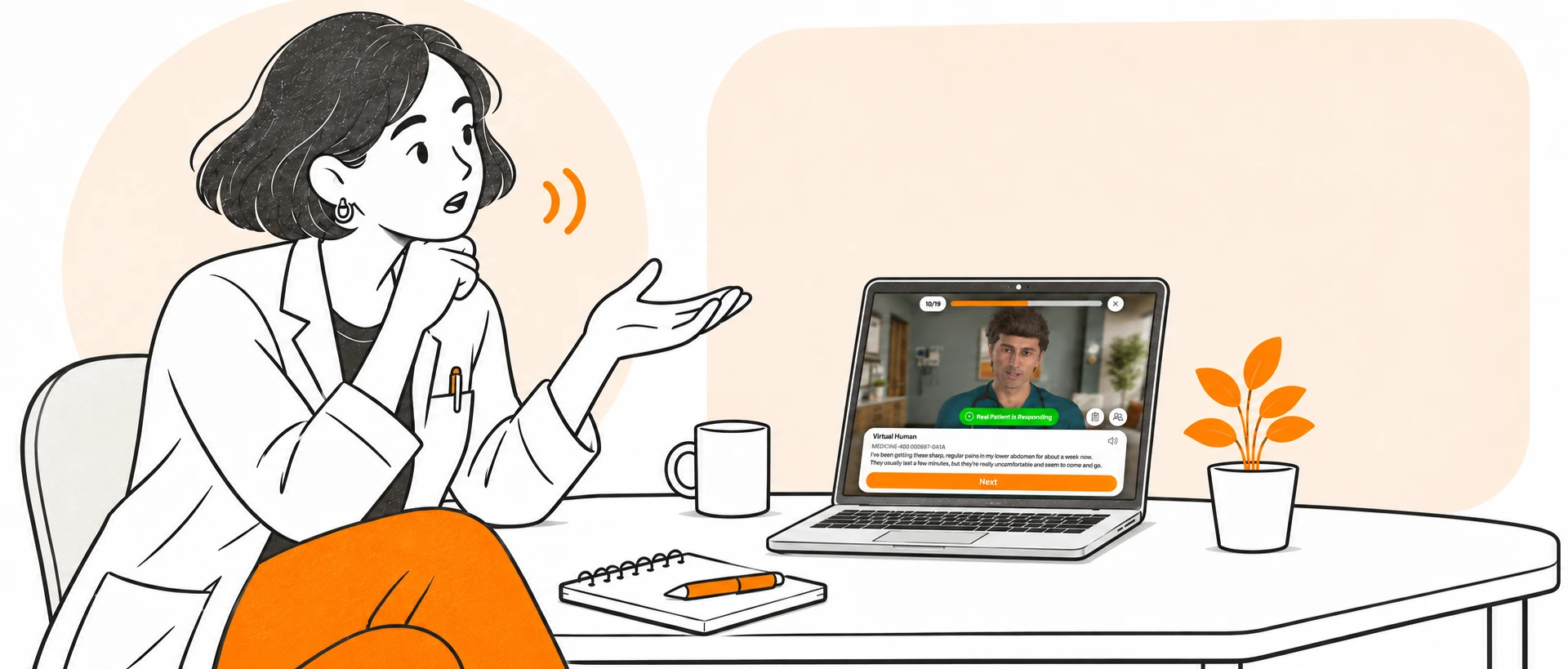
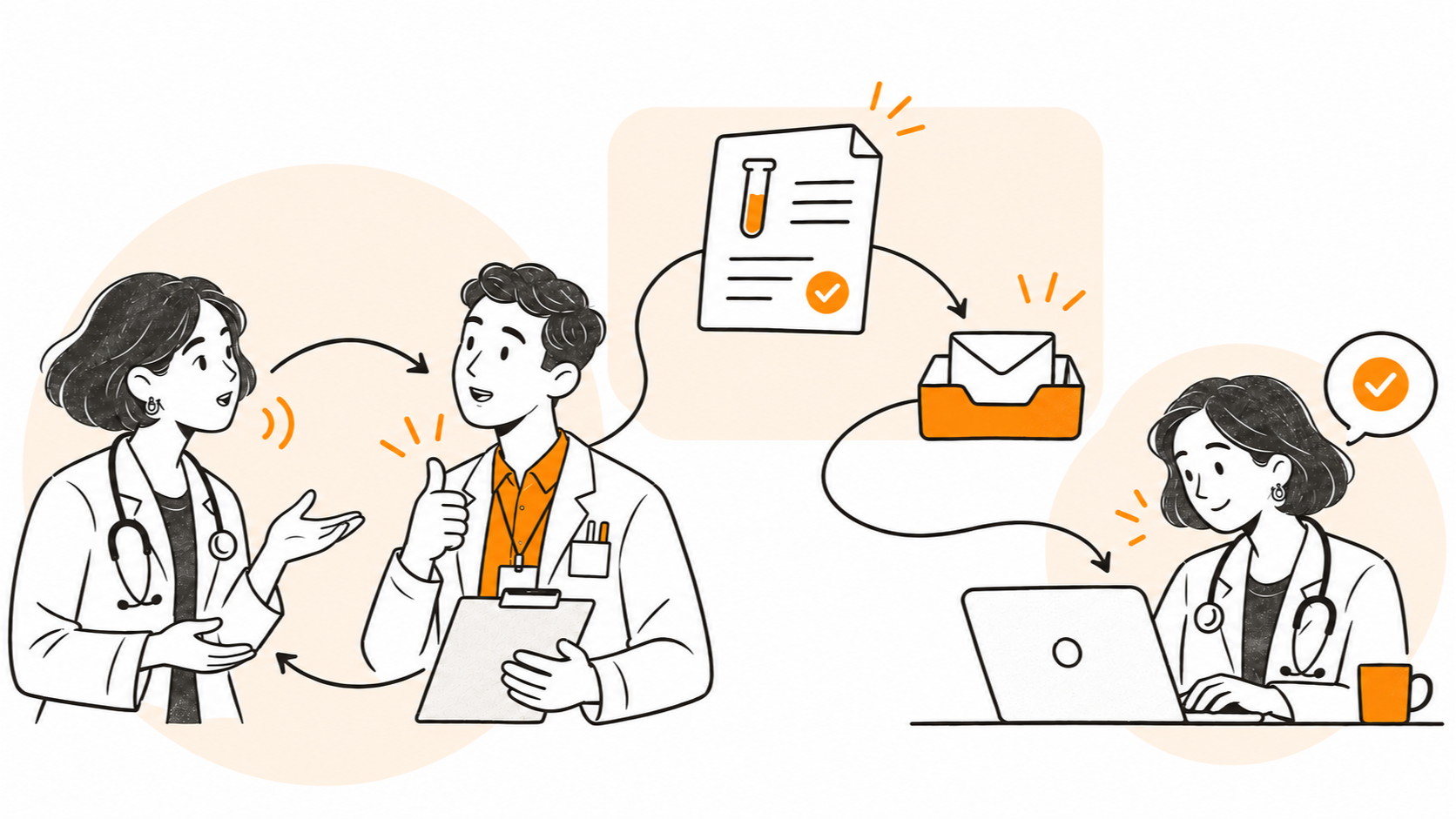
With virtual human simulation, clinicians practice hard conversations with a computer-generated person. Some systems let them talk out loud on a phone, tablet, or computer, with the virtual human responding in real time and automated scores and feedback at the end. Roles, devices, and feedback features vary by platform. Virtual colleague scenarios are a natural fit for handoffs and escalation. A virtual attending can push back on an escalation call. A virtual nurse can give a handoff that leaves out the backup plan, so the person receiving it has to notice and ask. A virtual patient with low health literacy can nod along until the clinician uses real teach-back. Jordan could practice that 2 a.m. call several times in a week without anyone booking an actor for each session.
What the studies show so far
Virtual human communication training isn't new. In a 2017 randomized trial at three U.S. medical schools, 421 second-year students used either a virtual human program called MPathic-VR or a computer-based learning module, and the virtual human group scored higher on a later communication skills exam with standardized patients [15]. Generative AI adds more flexible conversation, and its effects are still being studied. A review that searched through March 19, 2026, found 15 eligible studies of generative AI virtual patients, including text, voice, and avatar systems [16]. The evidence supported feasibility more strongly than effectiveness [16].
Two recent trials are encouraging. In one, 51 students and practicing clinicians were randomly assigned to about 30 minutes of practice with an AI patient plus feedback, or the same amount of time spent reading [17]. That same day, blinded raters scored their conversations with human actors, and the AI group improved more [17]. The study didn't test whether the skills lasted or carried into real care, and it can't separate the AI itself from the extra practice and feedback. In the other, 134 residents learned SPIKES, a six-step approach to breaking bad news, and then practiced with a real-time voice AI patient, with trained human actors, or with each other [18]. Both the AI and actor groups scored higher than the peer role-play group [18]. Scores were somewhat higher with actors, and the difference between actors and AI wasn't statistically significant, which isn't the same as showing they're equal [18].
What it hasn't shown yet
The studies cited here don't show that generative AI conversation practice reduces adverse events, malpractice claims, or readmissions in real care. Programs were generally brief, and long-term follow-up was limited [16]. The 2026 review also pointed to limits with emotional depth, nonverbal cues, accuracy, and possible bias in how AI patients are portrayed [16]. Use automated scores for coaching unless someone has shown they're reliable, accurate, and fair for the purpose you have in mind. Keep human-led assessment for emotionally complex conversations and high-stakes decisions, unless your AI system has shown it can handle them. For now, a mix makes sense, with virtual humans for frequent practice and people for coaching, calibration, and assessment.
Building Practice Into the Quality Loop
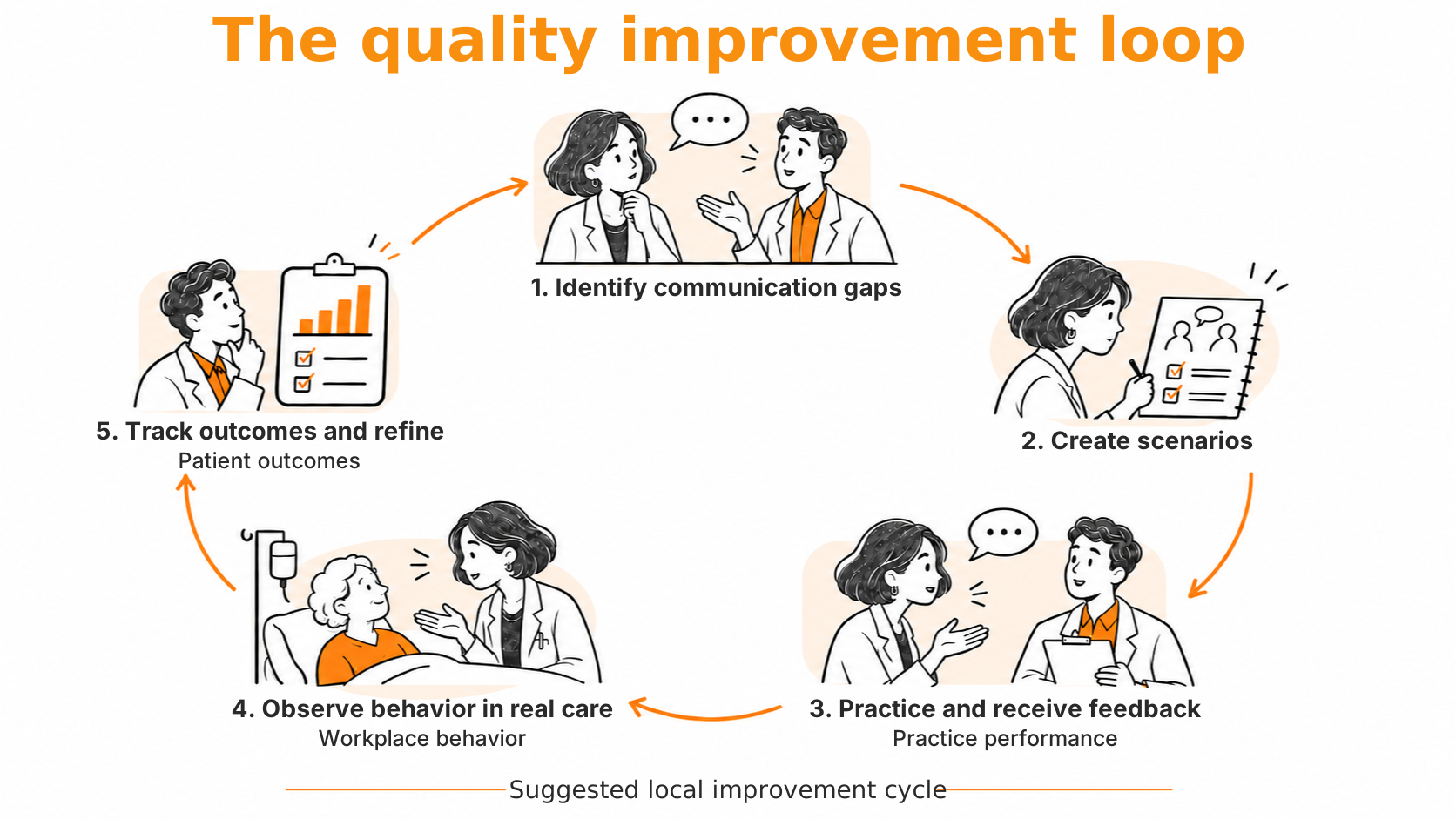
What follows is a suggested local approach, not a program these studies tested. Start by aiming virtual practice at a gap you already measure. Escalation is one example, since you can count the safety events where someone raised a concern and nothing happened. Handoffs are another, and many hospitals already use I-PASS observation tools. Explaining abnormal test results, discharge teach-back, telling a patient about an error, and working with an interpreter all fit as well. Each one has a behavior staff can practice and a process you can track.
From there, the program runs as a cycle. You find the conversations that keep going wrong in your own safety events, complaints, and claims, and build a short course for each one. Nurses, pharmacists, physicians, nurse practitioners, physician assistants, and respiratory therapists in those roles practice and come back on a regular schedule. Practice scores show where people still struggle. Unit leaders check whether the behavior shows up in real care through handoff observations, escalation audits, or teach-back checks. The next gaps become the next courses.
Plan the measurement before you start. Define your baseline rates, the behaviors you'll observe, and the outcomes you'll track. Pick how long to follow up based on how often the event happens, and watch for other changes, like new staffing or new reporting rules, that could move the numbers. A comparison with no training tells you whether practice beats doing nothing. Comparing your current training with your current training plus virtual practice tells you whether it adds anything. Randomizing units, where you can, makes that answer more trustworthy.
Where to Start
Pick one communication gap that already shows up in your safety reports, like escalation at night. Fix the system parts first: who gets called, how fast they need to respond, and what happens if they don't. Then give the staff who make those calls short, regular practice with a virtual colleague who sometimes pushes back, and check whether their real calls start to sound different. Measure both how staff communicate and what happens to patients. And the next new pharmacist on Jordan's unit could make that 2 a.m. call using SBAR to frame the concern and a read-back to close the loop: "Your patient's kidney function has gotten worse, and I'm worried the current blood thinner dose may not be right anymore. Can we review the drug and dose now and agree on a plan before the next dose? Then let's read the plan back to each other so we're both sure."
References
- Lo L, Rotteau L, Shojania KG. Can SBAR be implemented with high fidelity and does it improve communication between healthcare workers? A systematic review. BMJ Open. 2021;11(12):e055247. doi:10.1136/bmjopen-2021-055247. https://pmc.ncbi.nlm.nih.gov/articles/PMC8685965/
- Humphrey KE, Sundberg M, Milliren CE, Graham DA, Landrigan CP. Frequency and nature of communication and handoff failures in medical malpractice claims. J Patient Saf. 2022;18(2):130-137. doi:10.1097/PTS.0000000000000937. https://pubmed.ncbi.nlm.nih.gov/35188927/
- Casalino LP, Dunham D, Chin MH, et al. Frequency of failure to inform patients of clinically significant outpatient test results. Arch Intern Med. 2009;169(12):1123-1129. doi:10.1001/archinternmed.2009.130. https://pubmed.ncbi.nlm.nih.gov/19546413/
- Divi C, Koss RG, Schmaltz SP, Loeb JM. Language proficiency and adverse events in US hospitals: a pilot study. Int J Qual Health Care. 2007;19(2):60-67. doi:10.1093/intqhc/mzl069. https://pubmed.ncbi.nlm.nih.gov/17277013/
- Lingard L, Espin S, Whyte S, et al. Communication failures in the operating room: an observational classification of recurrent types and effects. Qual Saf Health Care. 2004;13(5):330-334. doi:10.1136/qshc.2003.008425. https://pubmed.ncbi.nlm.nih.gov/15465935/
- Centers for Medicare & Medicaid Services. FY 2027 IPPS Final Rule: Hospital Readmissions Reduction Program Supplemental Data File. 2026. Accessed November 5, 2026. https://www.cms.gov/medicare/payment/prospective-payment-systems/acute-inpatient-pps/archived-supplemental-data-files/fy-2027-ipps-final-rule-hospital-readmissions-reduction-program-supplemental-data-file
- The Joint Commission. Requirements for the Hospital Accreditation Program. Effective January 2026. NPG.01.02.01 and NPG.01.04.01. https://www.jointcommission.org/en-us/standards/national-performance-goals
- Starmer AJ, Spector ND, Srivastava R, et al. Changes in medical errors after implementation of a handoff program. N Engl J Med. 2014;371(19):1803-1812. doi:10.1056/NEJMsa1405556. https://pubmed.ncbi.nlm.nih.gov/25372088/
- Starmer AJ, Spector ND, O'Toole JK, et al. Implementation of the I-PASS handoff program in diverse clinical environments: a multicenter prospective effectiveness implementation study. J Hosp Med. 2023;18(1):5-14. doi:10.1002/jhm.12979. https://pmc.ncbi.nlm.nih.gov/articles/PMC10964397/
- Vick JB, Pace R, Klimek-Johnson P, et al. Teach-back in clinical communication: a systematic review and meta-analysis. J Gen Intern Med. Published online September 3, 2026. doi:10.1007/s11606-026-10678-y. https://pubmed.ncbi.nlm.nih.gov/42693371/
- Guo M, Bayley M, Ye XY, et al. Impact of medical safety huddles on patient safety: a stepped-wedge cluster randomised study. BMJ Qual Saf. 2026;35(5):326-333. doi:10.1136/bmjqs-2025-019170. https://pubmed.ncbi.nlm.nih.gov/41027730/
- Jesus TS, Zhang M, Lee D, et al. Improving patient experience with provider communication: systematic review of interventions, implementation strategies, and their effectiveness. Med Care. 2025;63(8):545-554. doi:10.1097/MLR.0000000000002158. https://pubmed.ncbi.nlm.nih.gov/40307673/
- Blackmore A, Kasfiki EV, Purva M. Simulation-based education to improve communication skills: a systematic review and identification of current best practice. BMJ Simul Technol Enhanc Learn. 2018;4(4):159-164. doi:10.1136/bmjstel-2017-000220. https://pmc.ncbi.nlm.nih.gov/articles/PMC8990192/
- Callen JL, Westbrook JI, Georgiou A, Li J. Failure to follow-up test results for ambulatory patients: a systematic review. J Gen Intern Med. 2012;27(10):1334-1348. doi:10.1007/s11606-011-1949-5. https://pmc.ncbi.nlm.nih.gov/articles/PMC3445672/
- Kron FW, Fetters MD, Scerbo MW, et al. Using a computer simulation for teaching communication skills: a blinded multisite mixed methods randomized controlled trial. Patient Educ Couns. 2017;100(4):748-759. doi:10.1016/j.pec.2016.10.024. https://pubmed.ncbi.nlm.nih.gov/27939846/
- Jiang J, Ye MZ, Kwok TTO, Wong JYH. GenAI-supported virtual patients in health care education: systematic review. J Med Internet Res. 2026;28:e82756. doi:10.2196/82756. https://www.jmir.org/2026/1/e82756
- Haut KG, Hasan M, Carroll T, Epstein RM, Sen T, Hoque E. Effects of a generative AI virtual patient on serious illness communication skills: randomized controlled trial. JMIR Med Educ. 2026;12:e93034. doi:10.2196/93034. https://mededu.jmir.org/2026/1/e93034
- Hu W, Zuo Y, Wan Q, Zhou J, Yuan L, Wang S. Evaluating real-time voice AI-based virtual patients for authentic communication training. Med Teach. 2026;48(10):1737-1746. doi:10.1080/0142159X.2026.2645021. https://pubmed.ncbi.nlm.nih.gov/41854185/