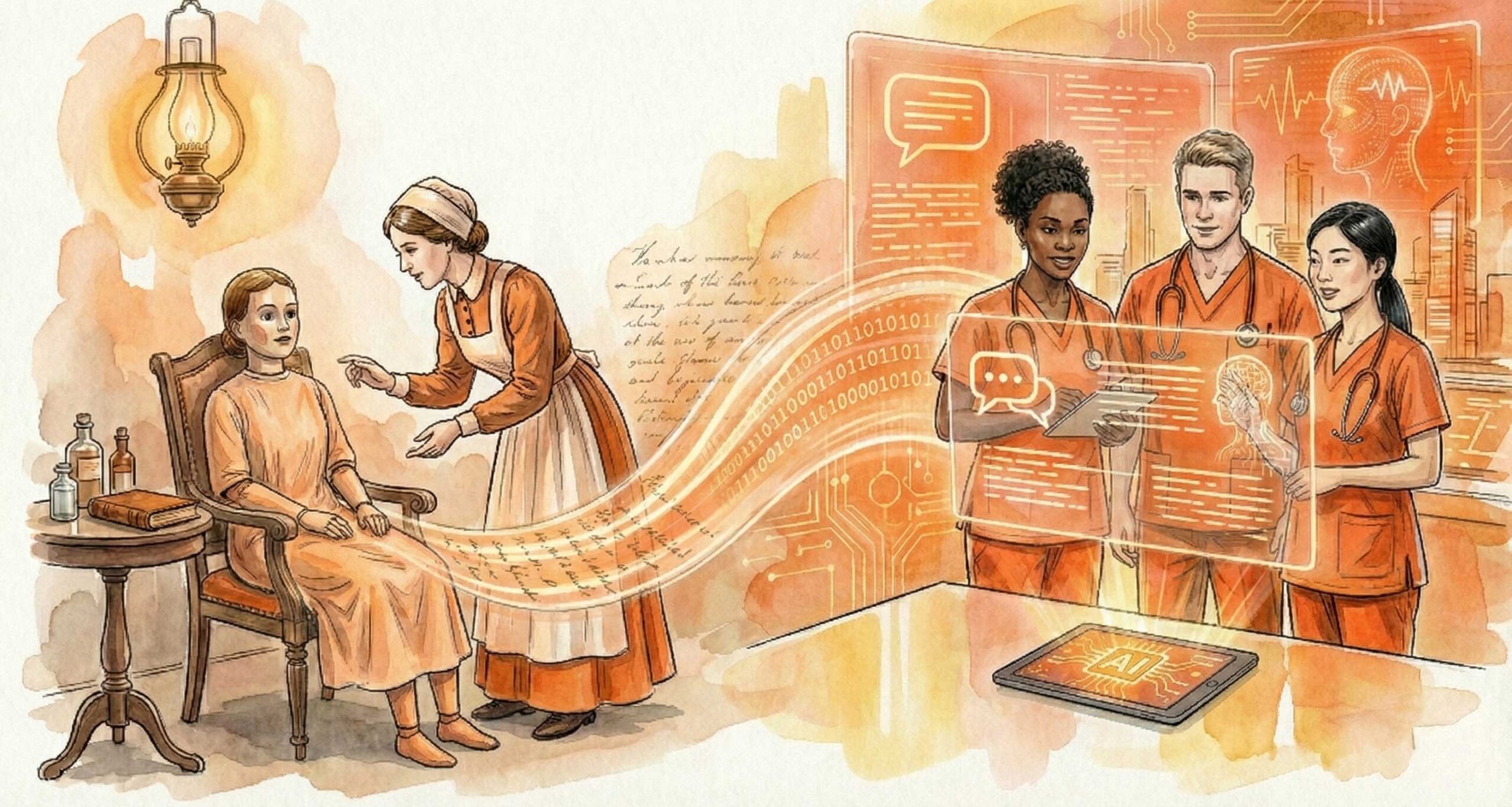
From Mrs. Chase to ChatGPT: How AI Is Revolutionizing Nursing Communication Training
By: Boris Rozenfeld, MD, Xuron Chief Learning Officer
A New Era for Nursing Education
Today’s nursing students are practicing patient conversations with AI-powered virtual humans that can respond naturally to any question, simulate emotional distress, and provide instant feedback on communication skills. These aren’t the rigid, menu-driven computer programs of the past. They’re sophisticated systems powered by large language models that can hold genuine conversations, adapt to student responses, and even portray specific personalities [2]. The technology marks a fundamental shift from physical simulation (practicing on mannequins) to cognitive simulation (practicing the thinking and communication skills that define nursing practice).
The Evolution of Nursing Simulation
To appreciate how revolutionary this moment is, consider where nursing education started. In 1911, a doll maker named Martha Jenkins Chase created “Mrs. Chase,” a life-sized mannequin for the Hartford Hospital Nurse Training Program [3]. For decades, nursing students practiced basic skills like bandaging and bathing on these static dolls. The focus was entirely on physical tasks.

By the 2000s, high-tech mannequins like SimMan could breathe, blink, and show vital sign changes. But they had a critical flaw: they couldn’t talk on their own [3]. An instructor had to speak through a microphone, breaking the realism. Students could practice checking blood pressure, but not the equally important skill of calming an anxious patient or taking a thorough history.
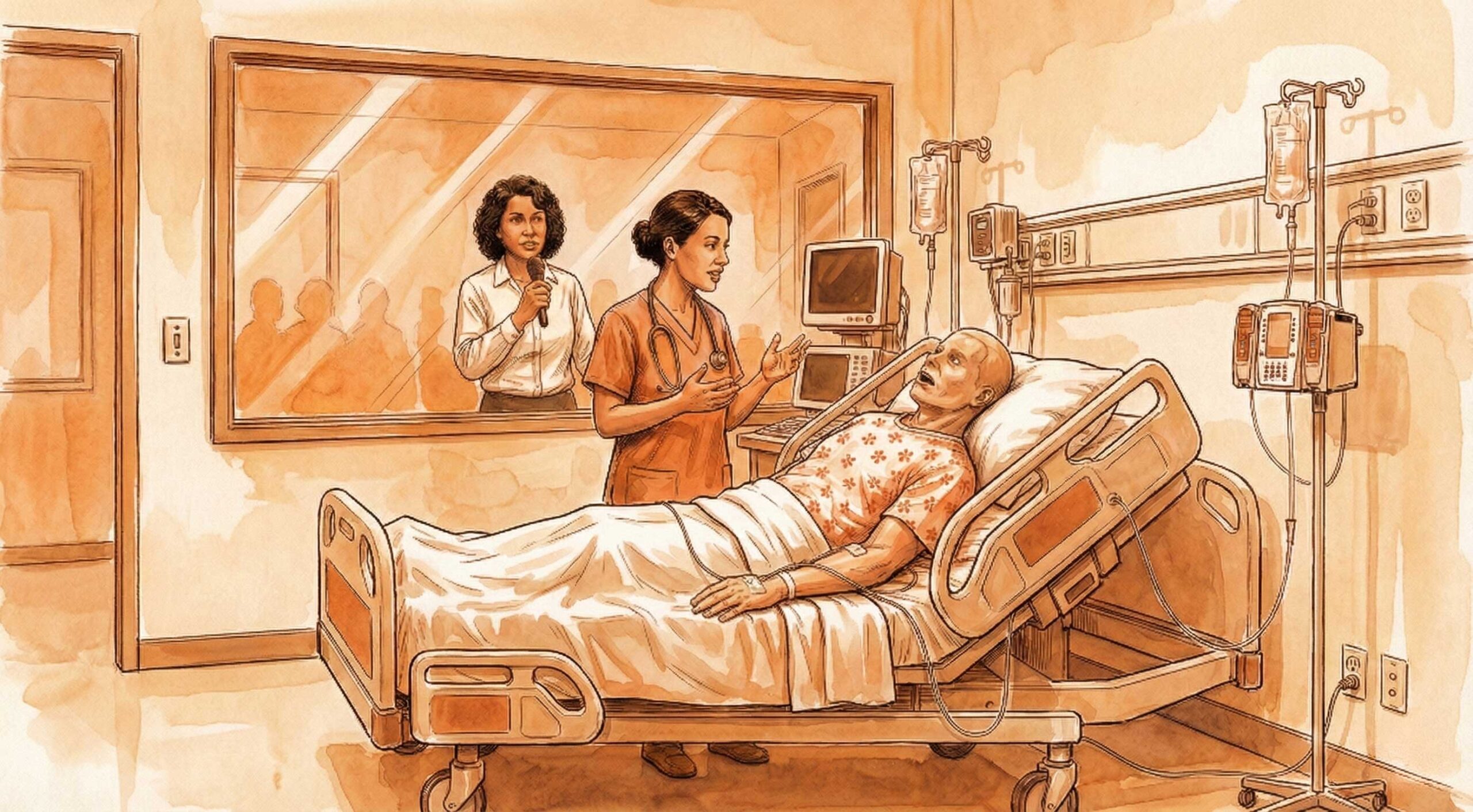
Screen-based virtual patients emerged as an alternative, but early versions were essentially digital choose-your-own-adventure books [4]. Students clicked from a menu of pre-written questions. While scalable and affordable, these systems couldn’t test whether students could formulate their own questions, show empathy, or handle unexpected patient responses.

The AI Breakthrough in Communication Training
The arrival of generative AI and large language models between 2020 and 2025 changed everything. For the first time, a virtual patient could understand natural language, generate contextually appropriate responses, and engage in genuinely open-ended dialogue [2].
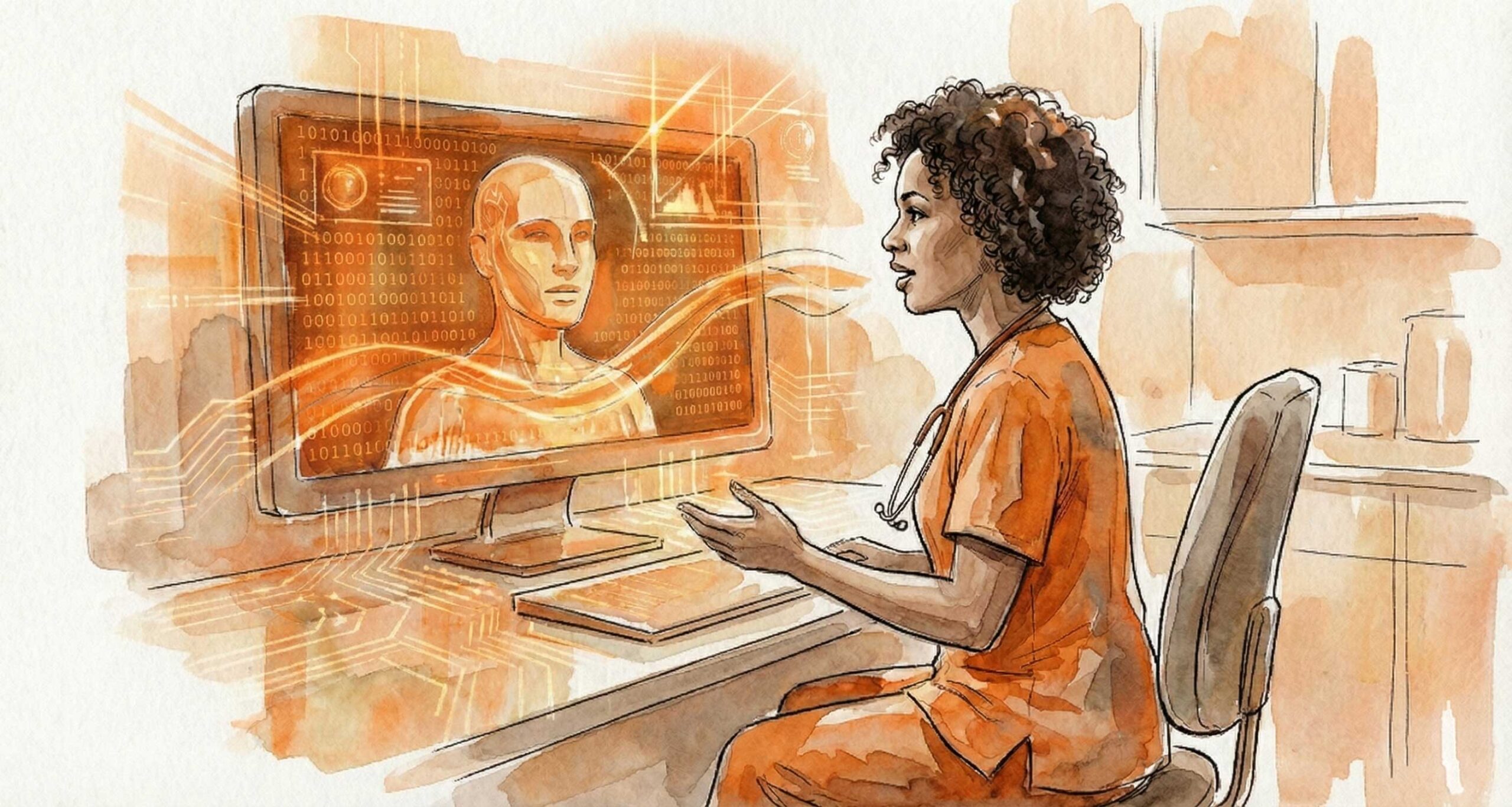
A 2025 multicenter trial in the UK compared AI-driven voice simulation against traditional actor-based training across multiple medical and nursing schools [5]. Students using the AI system showed meaningful improvements in communication skills, though they rated the experience slightly less satisfying than working with human actors. However, the cost difference was stark: AI training cost about half as much as using actors. The researchers concluded that AI offers a viable solution for scaling communication training to thousands of students who currently receive little or no individual practice [5].
Another study tested AI for one of nursing’s most challenging scenarios: end-of-life conversations [6]. Australian nursing students practiced discussing terminal care wishes with AI-generated patients from diverse backgrounds. After the training, students showed substantial improvements in their self-rated competence for these difficult discussions. Many described the AI interactions as surprisingly realistic and appreciated the safe space to practice delivering bad news without fear of causing actual harm [6].
Voice Versus Text: The Realism Factor
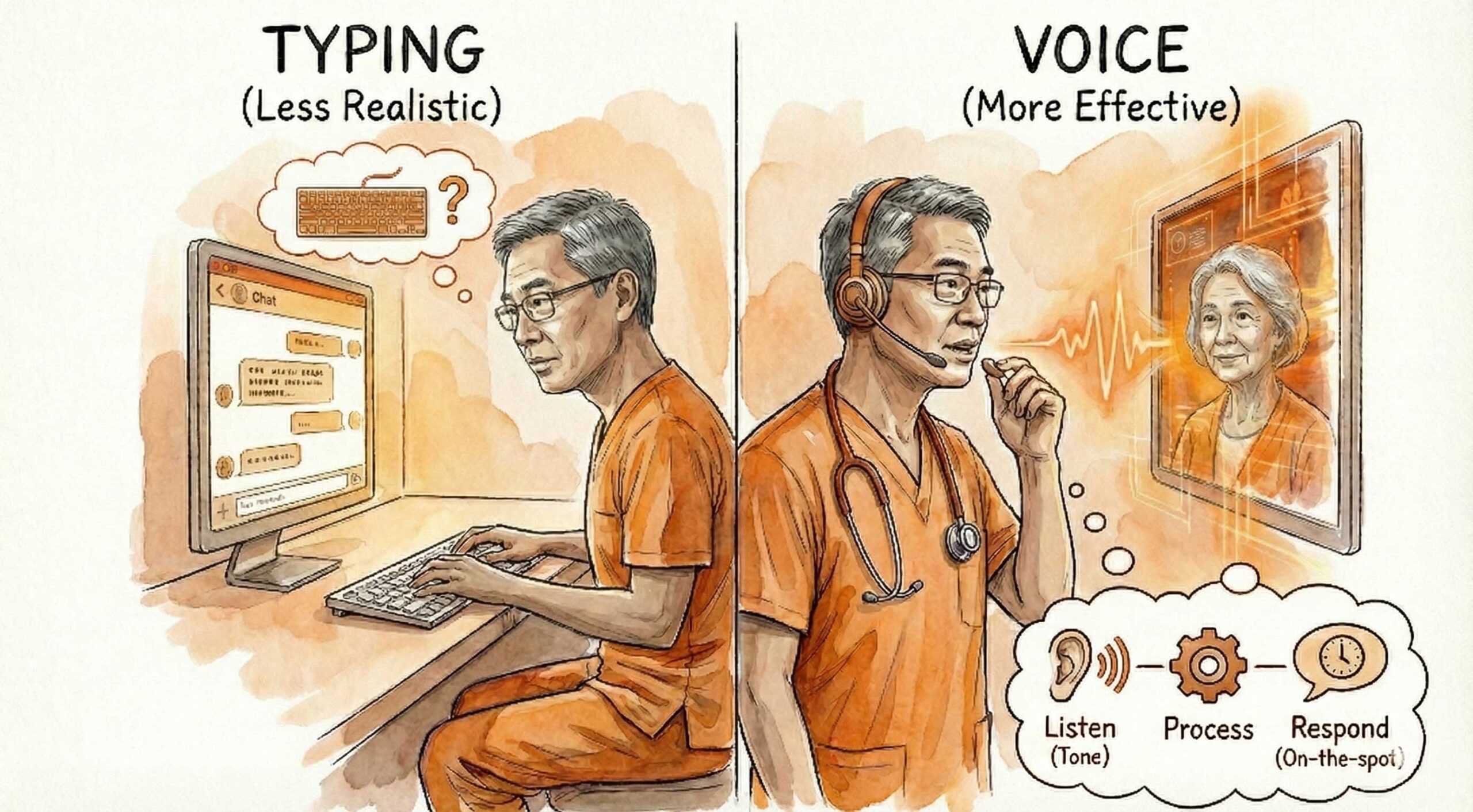
A critical question has emerged in the research: should students type their responses or speak them out loud? The evidence increasingly favors voice-based interaction [7]. Nursing is fundamentally a verbal profession. Nurses don’t type questions to patients in real clinical settings. Voice interaction forces students to experience the cognitive load of real conversations: listening to tone, processing information in real-time, and formulating responses on the spot [7].
Studies show that students prefer voice-based AI patients and find them more realistic [8]. The technology has improved dramatically. Early chatbots struggled with medical terminology and had frustrating delays. Modern systems using advanced language models can now engage in near-conversational speed interactions with accurate medical knowledge [8].
Training for High-Stakes Scenarios
AI virtual humans excel at creating emotionally charged scenarios that are difficult or expensive to stage with human actors. One innovative study used three distinct AI “patient bots” programmed with specific emotional states: depressed (withdrawn, short answers), anxious (uncertain, seeking reassurance), and frustrated (irritable, impatient) [9]. Students had to adapt their communication approach to each personality type. Because the AI introduced subtle variations each time, students couldn’t simply memorize a script. They had to learn genuine adaptability.
Mental health nursing has particularly benefited from this technology. Virtual reality simulations with AI patients have shown meaningful improvements in communication skills for psychiatric scenarios [10]. The key advantage is psychological safety. Students can practice de-escalating an agitated patient, make mistakes, and try again without real-world consequences or embarrassment [10].
Beyond Communication: Clinical Reasoning Skills
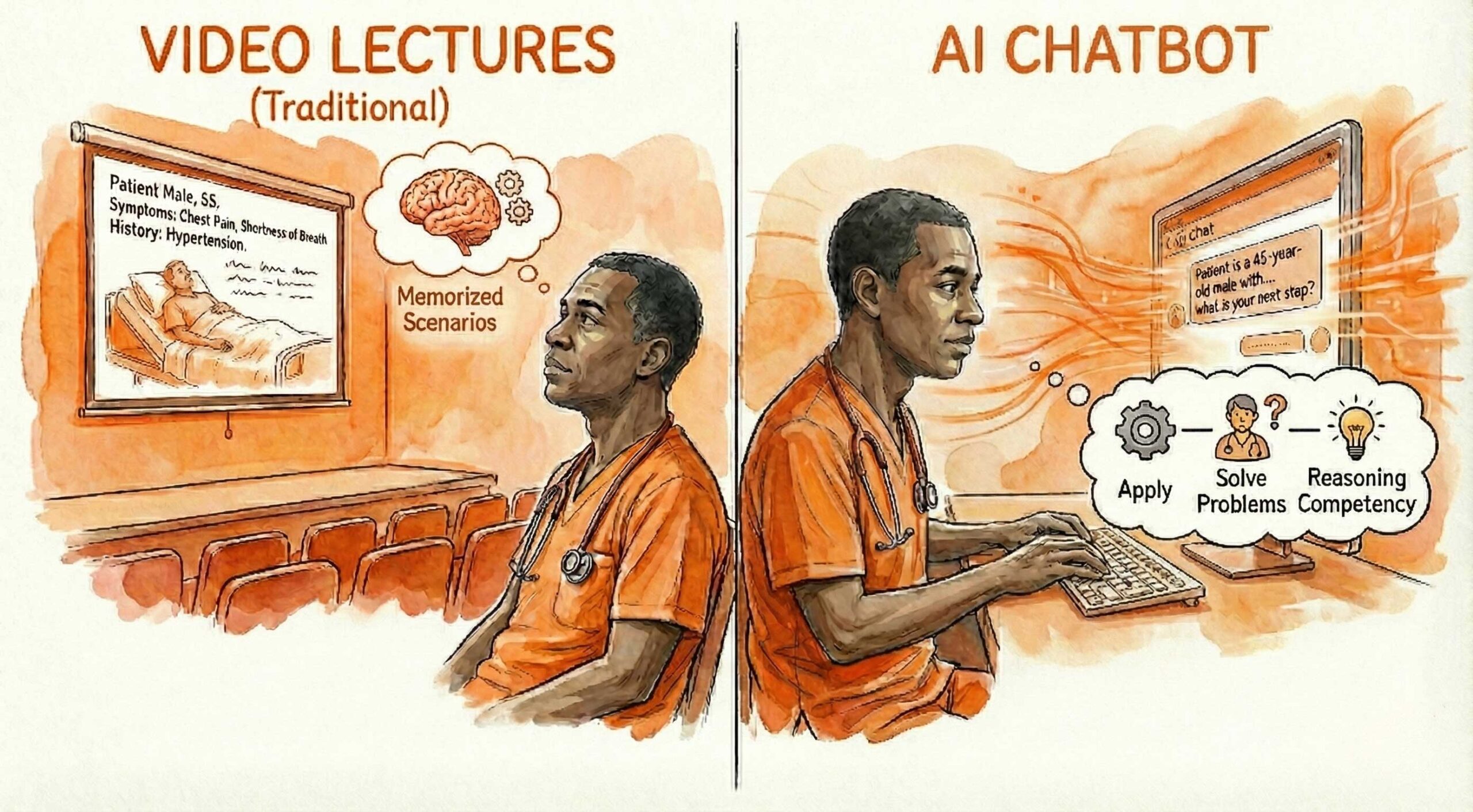
While communication training has received the most attention, AI is also transforming how students develop clinical reasoning. Large language models can now generate infinite variations of clinical cases, ensuring students face different presentations rather than memorizing specific scenarios [11]. A South Korean study found that students using an AI chatbot to learn mechanical ventilation showed significantly higher clinical reasoning competency than those who watched video lectures, even though raw knowledge scores were similar [12]. The AI helped students apply their knowledge to solve problems.
Perhaps most impressive, AI systems are beginning to assess the quality of student clinical reasoning. A 2025 multi-institutional study developed an AI tool that evaluated nursing students’ diagnostic reasoning in clinical notes with accuracy matching expert faculty raters [13]. This enables instant, reliable feedback on thousands of student assignments, a task that would take human instructors hundreds of hours.
Graduate and Specialty Applications
Advanced practice nurses are using AI for more complex skills. One study trained nurse anesthesia students to advocate for patient safety resources using an AI-powered hospital executive named “Pat Maxwell” [14]. The AI adapted its resistance based on the quality of the student’s arguments. If students used evidence-based frameworks effectively, Pat became more cooperative. Vague or weak arguments met with increased pushback. Students reported significant gains in confidence for leadership communication [14].
Moreover, universities are formalizing this knowledge. Institutions like UAB and UT Austin now offer graduate certificates in “AI in Nursing,” recognizing that AI competency is becoming a distinct specialization within nursing practice [15].
Safety and Limitations
AI in nursing education isn’t without risks. Large language models can confidently state incorrect medical information, a phenomenon called “hallucination” [2]. Educational programs must implement strict safeguards to prevent AI from teaching dangerous practices. There’s also concern about algorithmic bias, as AI trained primarily on data from certain populations may fail to accurately represent diverse patient experiences [16]. Responsible implementation requires ongoing testing, faculty oversight, and teaching students to critically evaluate AI-generated content rather than accepting it blindly.

Looking Forward
The nursing profession has reached a turning point. Faculty shortages and limited clinical sites mean traditional education models cannot meet the demand for qualified nurses. AI-powered virtual humans provide unlimited, 24/7 practice opportunities at a fraction of the cost of human actors or clinical placements [5]. They offer consistency, scalability, and the ability to create scenarios that would be impossible or unethical to stage in real life.
The early evidence is clear: AI virtual patients are effective tools for developing both communication skills and clinical reasoning [2][5][6][12]. While they don’t fully replace the emotional nuance of human interaction, they provide a powerful complement to traditional teaching methods. The future of nursing education will likely involve a blend: AI for high-volume, deliberate practice, and human simulation for scenarios requiring deeper emotional connection.
After more than a century of evolution from Mrs. Chase to ChatGPT, nursing education has finally found a technology that can teach not just the hands of nursing, but its mind and voice as well.
References
- Aebersold M. Simulation-based learning: no longer a novelty in undergraduate education. Online J Issues Nurs. 2018;23(2). doi:10.3912/OJIN.Vol23No02PPT03 (Note: This is frequently cited as a 2018 reprint/topic collection; the original seminal article was published in 2011, but the 2018 citation is valid for the “Virtual Simulation” topic issue.)
- Elhilali A, Ngo AS, Reichenpfader D, Denecke K. Large language model–based patient simulation to foster communication skills in health care professionals: user-centered development and usability study. JMIR Med Educ. 2025;11:e81271. doi:10.2196/81271
- University of Virginia School of Nursing. Flashback Friday: the history of simulation. Published July 31, 2020. Accessed December 23, 2025. https://nursing.virginia.edu/news/flashback-history-of-simulation/
- Shorey S, Ng ED. The use of virtual reality simulation among nursing students and registered nurses: a systematic review. J Med Internet Res. 2019;21(2):e10635. doi:10.2196/10635
- Tyrrell EG, Sandhu SK, Berry K, et al. Web-based AI-driven virtual patient simulator versus actor-based simulation for teaching consultation skills: multicenter randomized crossover study. JMIR Form Res. 2025;9:e71667. doi:10.2196/71667
- Hall K, Reiter K, Boyle C, et al. End-of-life education: an explorative study using artificial intelligence simulations in undergraduate nursing. Nurs Outlook. 2025;74(1):102307. doi:10.1016/j.outlook.2024.102307
- Fernández-Alcántara M, Pérez-Marfil MN, Catena-Martínez A, Cruz-Quintana F, García-Caro MP. Virtual simulation tools for communication skills training in health care professionals: literature review. JMIR Med Educ. 2025;11:e63082. doi:10.2196/63082
- Rädel-Ablass K, Fabry G, Feufel MA, Möltner A, Herzog W, Nikendei C. Teaching opportunities for anamnesis interviews through AI-based teaching role plays: a survey with online learning students from health study programs. BMC Med Educ. 2025;25(1):34. doi:10.1186/s12909-025-06544-9
- Choo S, Yoo S, Endo K, Truong B, Son MH. Advancing clinical chatbot validation using AI-powered evaluation with a new 3-bot evaluation system: instrument validation study. JMIR Nurs. 2025;8:e63058. doi:10.2196/63058
- Frontiers Production Office. The effect of virtual reality simulation on nursing students’ communication self-efficacy, empathy, and communication competence in mental health nursing. Front Psychiatry. 2024;15:1351123. doi:10.3389/fpsyt.2024.1351123 (Note: Listed with corporate authorship pending final author metadata update in the 2024/2025 volume.)
- Thesen Laboratory. AI patient actor: an open-access generative-AI app for communication training in health professions. Geisel School of Medicine at Dartmouth. 2025. Accessed December 23, 2025. https://geiselmed.dartmouth.edu/thesen/patient-actor-app/
- Han JW, Park J, Lee H. Development and effects of a chatbot education program for self-directed learning in nursing students. BMC Med Educ. 2025;25:825. doi:10.1186/s12909-025-07316-2
- Schaye V, DiTullio D, Guzman BV, et al. Large language model–based assessment of clinical reasoning documentation in the electronic health record across two institutions: development and validation study. J Med Internet Res. 2025;27:e67967. doi:10.2196/67967
- Freeman B, Freeman C. AI-enhanced simulation for leadership communication in nurse anesthesia education: a mixed-methods pilot study. J Nurs Anesth Educ. 2025. doi:10.63524/jnae.2845731
- UAB School of Nursing. Artificial Intelligence in Nursing, Graduate Certificate. University of Alabama at Birmingham. 2025. Accessed December 23, 2025. https://www.uab.edu/degrees/graduate/ai-nursing-gc
- Ni Z, Zhang W, Wang L, et al. ChatGPT applications in nursing: current status and future perspectives. J Nurs Manag. 2024;32(8). doi:10.1111/jonm.14494