
A New EMT on a Behavioral Health Call
An agitated patient
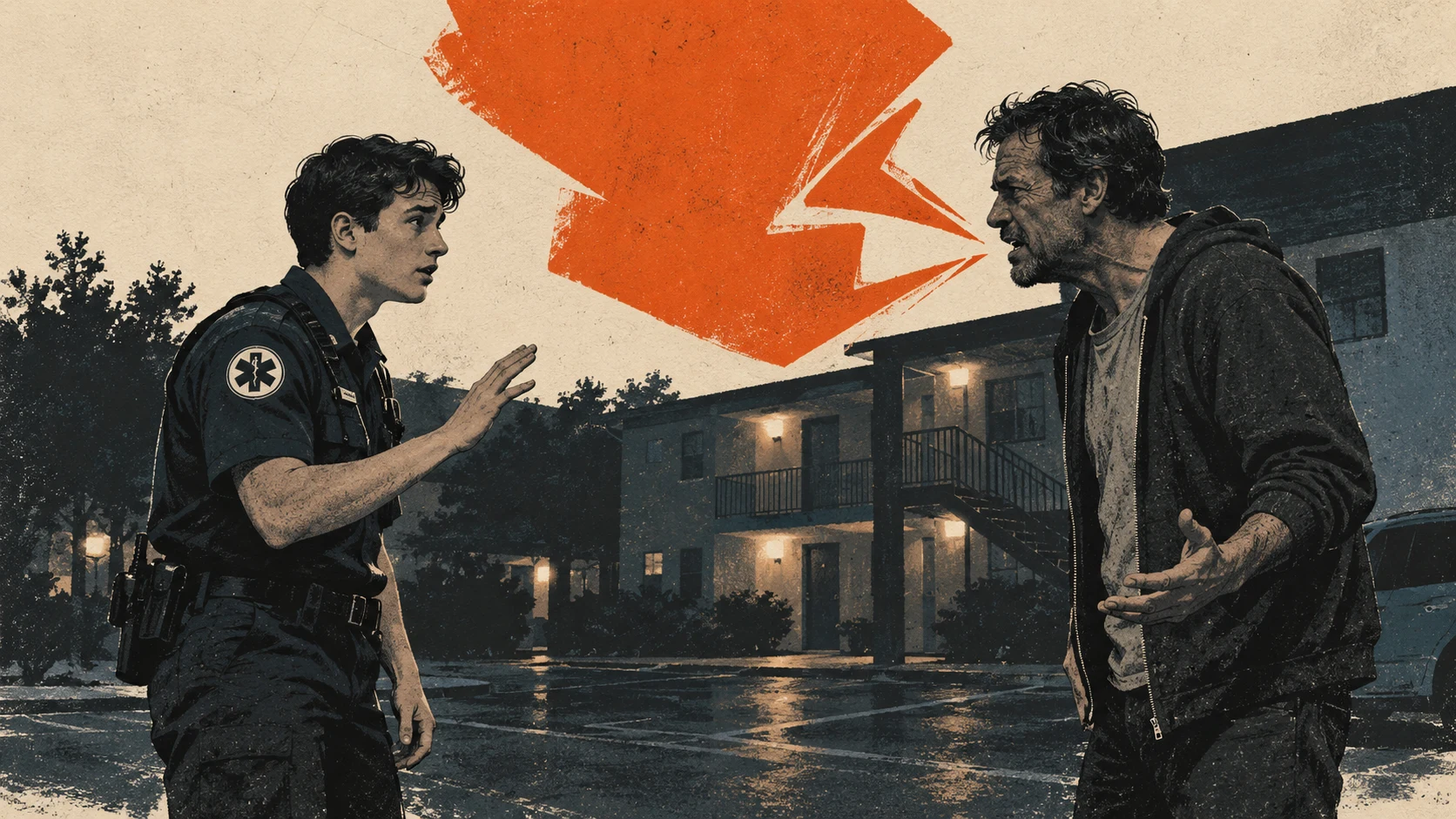
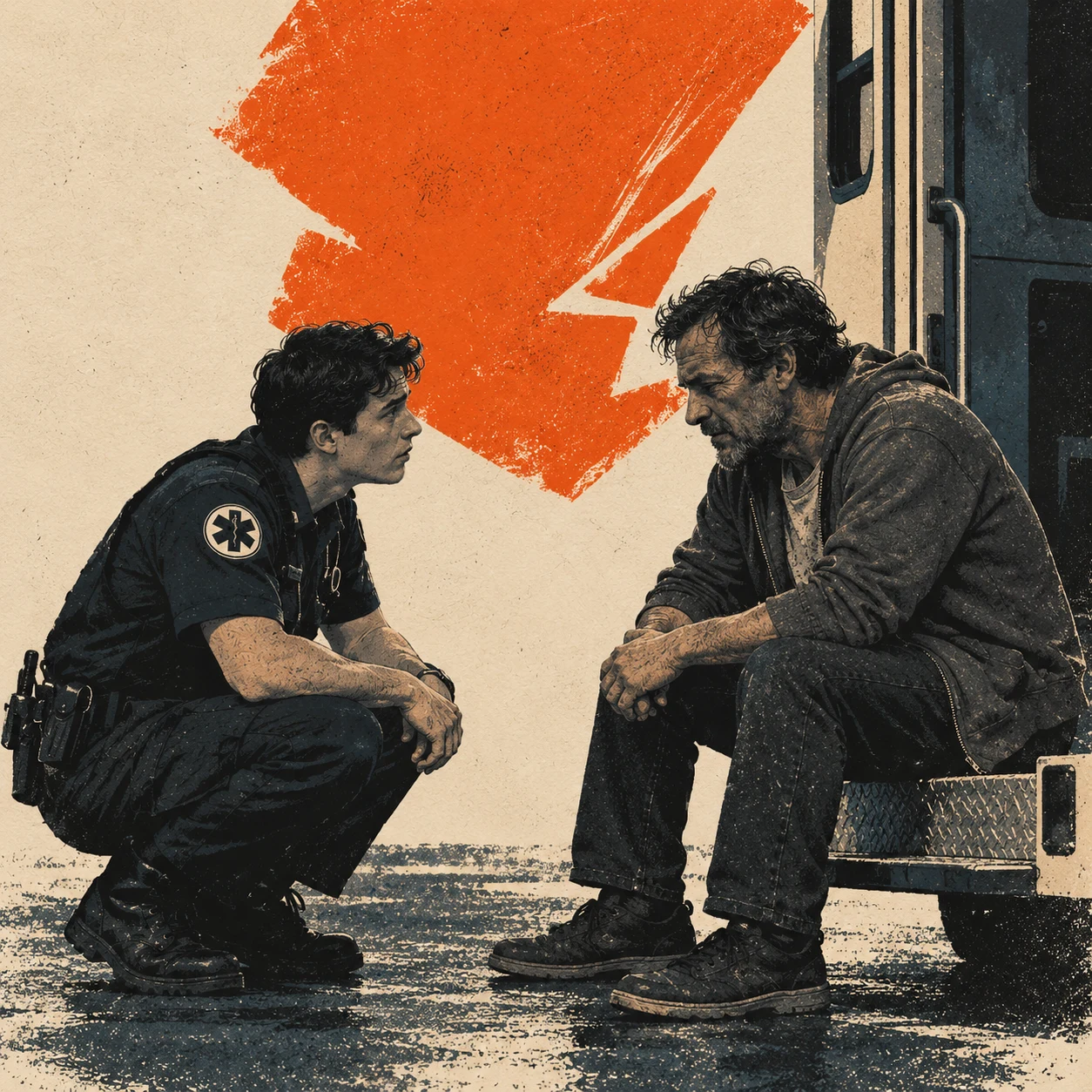
Picture an EMT named Jordan, four months out of his academy class and riding with a paramedic partner. They're sent to an apartment complex where a man in his forties is pacing the parking lot, and his sister says he hasn't slept in three days. When Jordan walks up, the man yells, "Get away from me." Jordan remembers the verbal defusing unit from class. He knows he should introduce himself, give the man some space, and ask what's wrong. What comes out instead is "Sir, I need you to sit down," and the man takes a step toward him. His partner steps in, they back off, and they wait for police. Nobody gets hurt.
An interrupted handoff
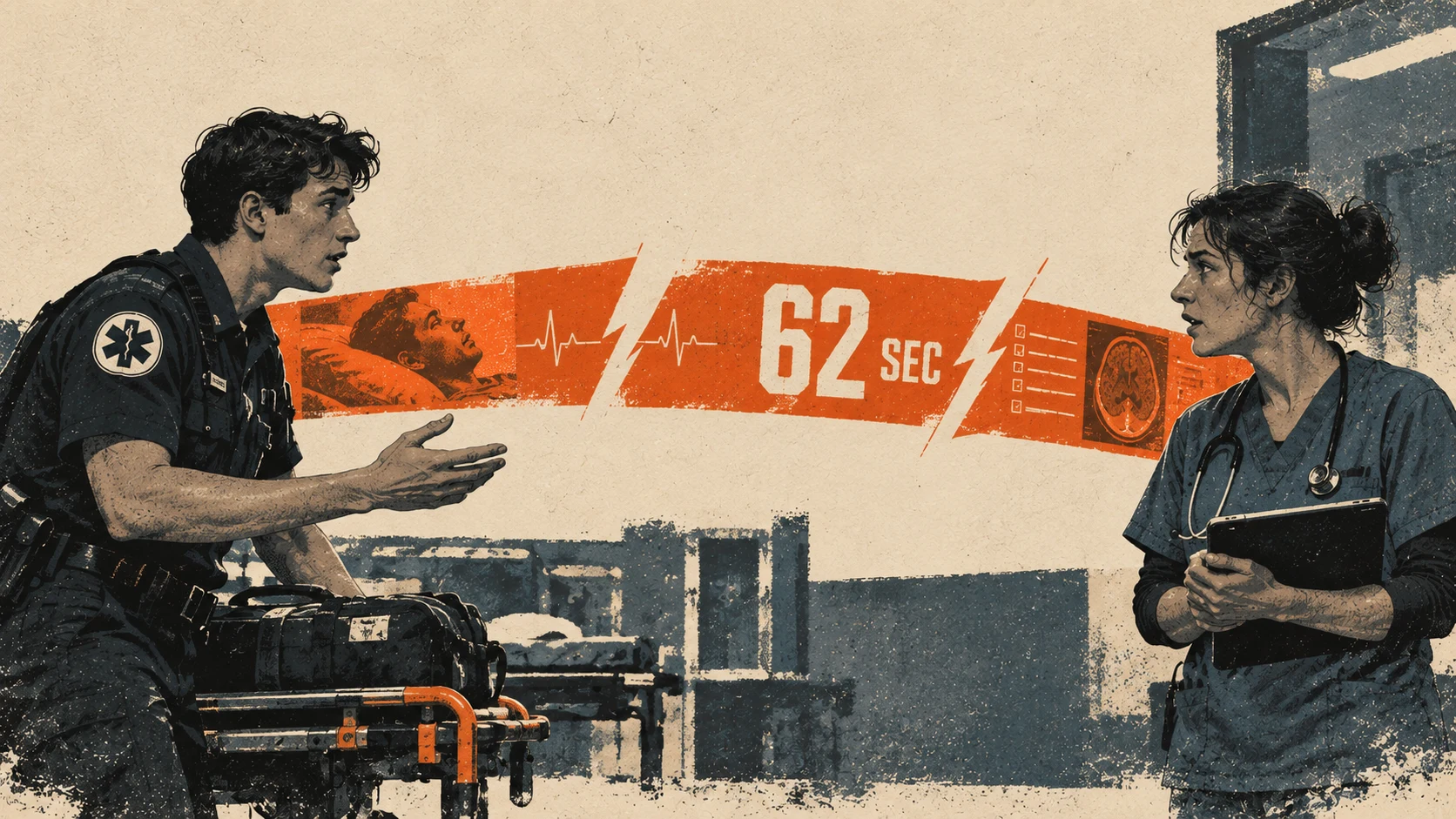
At the hospital, an ED nurse interrupts Jordan's report twice, and he forgets to mention the medication the sister told him about. The call gets documented as complete. Nobody scored either conversation, and Jordan will face versions of both hundreds of times before anyone watches him do it again.
Communication Is Already in the Curriculum
What the national standards require
It's easy to assume EMS programs skip communication. They don't. The National EMS Education Standards list interviewing techniques, verbal defusing strategies, family-centered care, consent and refusal, end-of-life issues, and "cohesive and organized patient handoff" as part of EMT education [1].
What good de-escalation looks like
The harder question is how often a new EMT gets to say the words out loud, to someone who reacts, before a real call. A class can explain a de-escalation framework. The American Association for Emergency Psychiatry's Project BETA guidance describes verbal de-escalation as helping an agitated patient calm themselves through engagement and collaboration, not forcing compliance [2]. Doing that while a stranger shouts at you is a different skill from describing it on an exam.
What Research Shows About EMS Communication
De-escalation in simulated violent calls
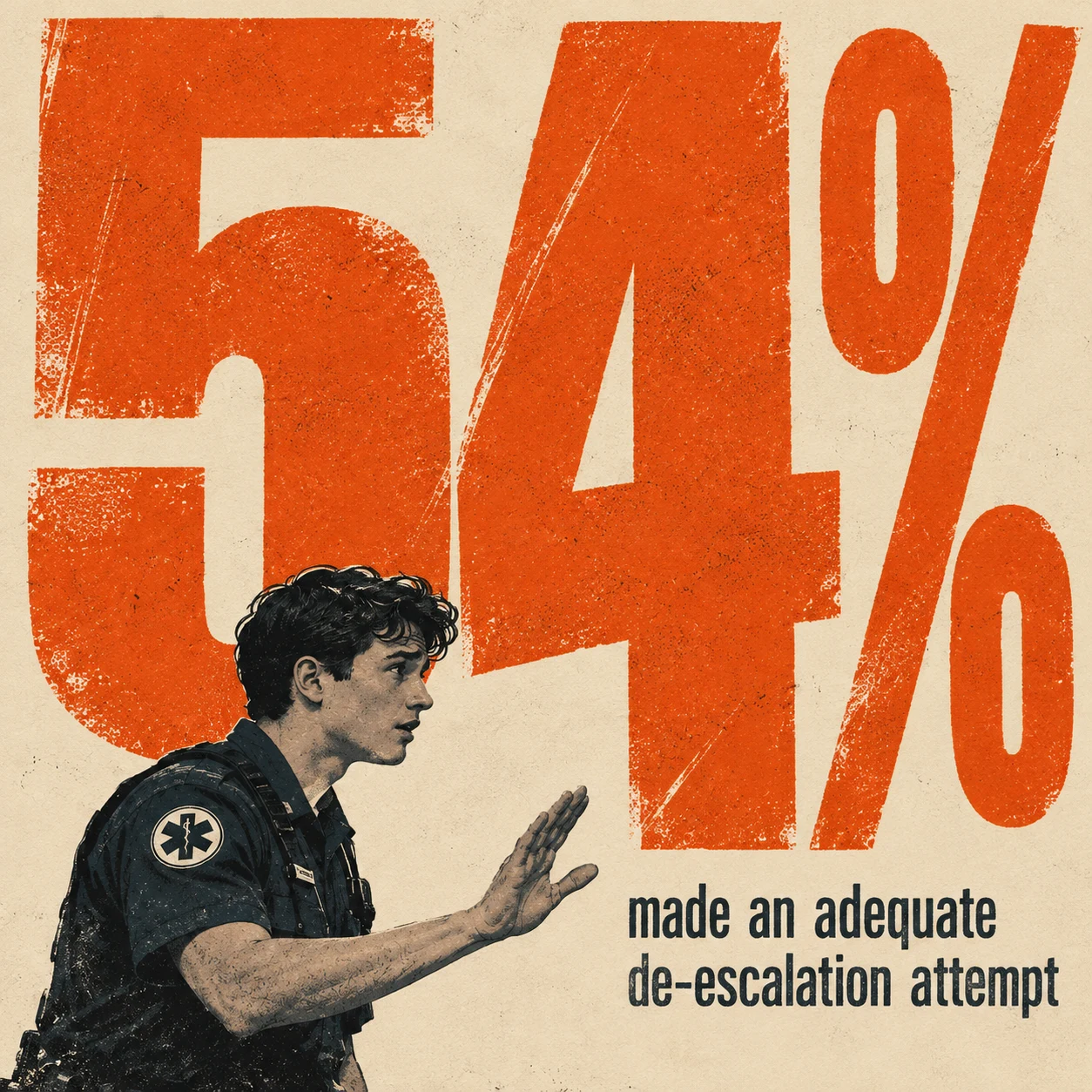
In a 2022 study, 270 EMS professionals worked through standardized simulated scenarios in which the threat of violence kept rising [3]. About 54% made an adequate de-escalation attempt, and 20% neither de-escalated adequately nor left the unsafe scene. Among the small group of EMTs in the study, only 32% made an adequate attempt, compared with 59% of paramedics. People with prior crisis intervention training had about twice the odds of adequate de-escalation. The study also tracked whether crews got out, because what you say and staying safe go together.
Handoffs to hospital teams
The same kind of gap shows up at the hospital door. A video review of 99 EMS handoffs to trauma teams found that the median report lasted 62 seconds and scored 11 out of 20 for completeness, with a median of two interruptions [4]. The trauma team caused most of those interruptions. In videotaped pediatric resuscitations, 87% of EMS handoffs included inefficient communication, and ED staff interrupted about half of them [5].
Refusals
When a patient says no to transport, the EMT's job is to make sure the choice is an informed one. That means explaining the risk in plain words, finding out why the person is refusing, and checking what they understood. In a review of 137 refusal calls in Cleveland, crews reported discussing the risks of refusing in only 44.5% of cases [6]. That study is from 2005 and covers one city, so it isn't a current national rate. Written guidance is uneven too. A 2025 review of 34 statewide EMS protocols found that 8 states had no refusal guidance at all, and only 6 covered all five areas the researchers looked for [7]. The authors list common reasons people refuse, including feeling better, intoxication, fear or mistrust of the health system, and not grasping how sick they are [7]. Each of those reasons calls for a different conversation.
Families and hospice calls
Many calls have a second person in the room. A parent may answer every question meant for a teenager, or a spouse may push for care the patient has turned down. In a 2018 survey of 182 EMTs and paramedics, only 30% had received formal education on hospice care, and trouble with families came up often in their written answers [8]. A 2023 joint position statement from the National Association of EMS Physicians and the American Academy of Hospice and Palliative Medicine recommends hospice education for EMS clinicians that stresses "the ongoing development of end-of-life communication skills" [9]. It notes that in one study, more than half of hospice caregivers called 911 before calling their hospice team, and it lists simulation as one training format that needs more research [9]. Picture a daughter who believes the ride to the hospital means her father will get better. The EMT has to explain what the transport is for and stay with her fear, without making promises.
Limits of these studies
These studies describe EMS broadly and don't show that any one agency or academy has these problems. They do show that conversations EMTs are taught can break down under real pressure.
Why These Conversations Are Hard to Practice
Simulation and deliberate practice
A 2011 meta-analysis led by William McGaghie found that simulation-based education with deliberate practice outperformed traditional clinical education, with an overall effect size of 0.71 [10]. EMS already lives by this idea. Nobody's first airway is supposed to be on a real patient, so students practice on manikins first.
The cost of practicing conversations
Hard conversations don't have an easy equivalent. Role-play with classmates feels awkward, and patient actors cost money and instructor time. In a United Kingdom trial with 396 medical students, actor-based communication training cost £61.75 per student, compared with £33.48 for AI-based practice [11]. On the truck, a preceptor's first job is the patient, so a student who's struggling with a conversation usually gets rescued before he can find his own way through it.
Where Virtual Humans Fit
How virtual human practice works
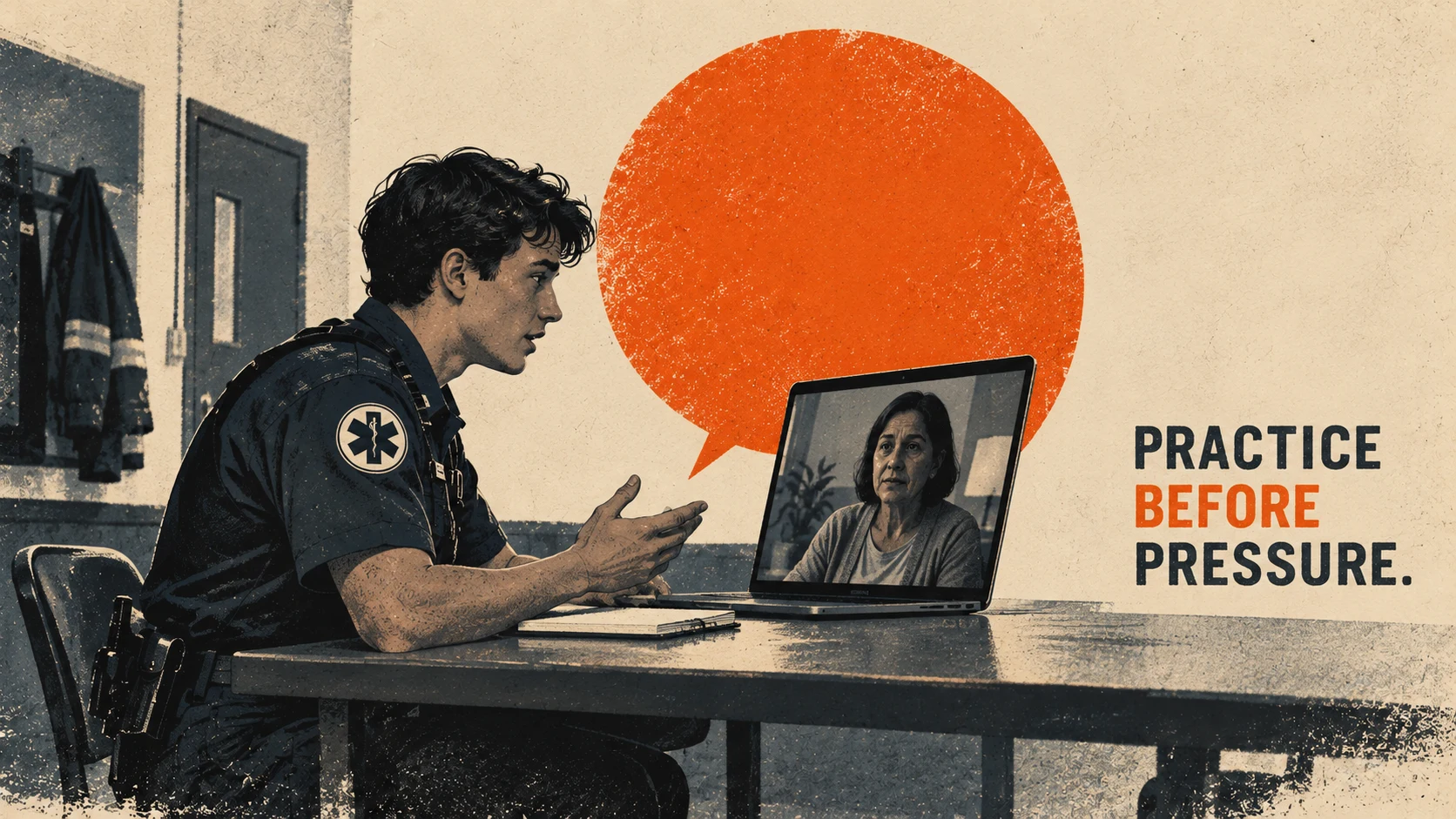
AI virtual humans give EMTs a place to practice those conversations. The student has a spoken conversation with a virtual patient on a phone, tablet, or computer. The patient reacts to what the student actually says, calming down when he feels heard and pushing back when he gets orders. A virtual ED nurse can cut in halfway through a report, ask for something already covered, and force the student to recover. In a refusal case, the virtual patient can hold a hidden reason, like a dog at home or a bad past hospital visit, that only comes out if the student asks. A worried parent can keep cutting in until the student finds a way to talk with both parent and child. After each session, the student gets scored feedback on specific skills and can try again. A good de-escalation case also has to reward stepping back when a scene turns unsafe.
Programs build courses around the conversations their students find hardest, such as an agitated patient, a refusal, or an interrupted handoff. Everyone practices the same cases more than once, and cohort results show instructors what to teach again.
What still needs live training
Virtual humans don't teach body position, scene exits, or crew coordination. Live simulation, field training officers, and preceptors stay at the center of EMS education. The virtual patient adds repetitions where there are usually few.
What the Evidence Shows So Far
Recent findings
A 2026 systematic review in the Journal of Medical Internet Research found only 15 studies of generative AI virtual patients, with 645 participants across nursing, medicine, pharmacy, radiography, and medical first-responder training [12]. Learners generally found the tools usable and acceptable, and the controlled studies reported better outcomes than comparison groups. In a randomized trial accepted for publication in JMIR Medical Education, 51 students and clinicians who practiced serious illness conversations with an AI virtual patient improved more than those who spent the same time reading about the same framework [13].
Gaps in the research
Most studies were small and brief, and few followed learners over time [12]. None has shown that AI practice improves how working EMTs talk with real patients. AI-generated scores also need to be checked against trained human raters before anyone treats them as proof of competence. In the UK trial, students rated their gains a bit higher after actor sessions than after AI practice [11].
Where to Start
An academy or agency can start small. Ask instructors and field training officers which conversation new EMTs struggle with most in their first months, then pick one or two, such as the agitated patient, a refusal, or the ED handoff. Have every student practice them several times before third rides, and compare first and last scores with how they do in a live, human-rated scenario. Whether this kind of practice changes what happens in a real parking lot at 2 a.m. is still unproven, and programs that track it can help answer that.
If Jordan had worked through that conversation a few times first, he might have reached for his name and an open question instead of an order. He'd still want his partner beside him.
References
- National Highway Traffic Safety Administration. National EMS Education Standards. U.S. Department of Transportation; 2021 (amended February 24, 2025). https://www.ems.gov/assets/EMS_Education_Standards_2021_Updated2_24_25forEO.pdf
- Richmond JS, Berlin JS, Fishkind AB, et al. Verbal de-escalation of the agitated patient: consensus statement of the American Association for Emergency Psychiatry Project BETA De-escalation Workgroup. Western Journal of Emergency Medicine. 2012;13(1):17-25. doi:10.5811/westjem.2011.9.6864. https://escholarship.org/uc/item/55g994m6
- Garner DG Jr, DeLuca MB, Crowe RP, et al. Emergency medical services professional behaviors with violent encounters: a prospective study using standardized simulated scenarios. JACEP Open. 2022;3(2):e12727. doi:10.1002/emp2.12727. https://pmc.ncbi.nlm.nih.gov/articles/PMC9023872/
- Nagaraj MB, Lowe JE, Marinica AL, et al. Using trauma video review to assess EMS handoff and trauma team non-technical skills. Prehospital Emergency Care. 2023;27(1):10-17. doi:10.1080/10903127.2021.2000684. https://pubmed.ncbi.nlm.nih.gov/34731071
- Sumner BD, Grimsley EA, Cochrane NH, et al. Videographic assessment of the quality of EMS to ED handoff communication during pediatric resuscitations. Prehospital Emergency Care. 2019;23(1):15-21. doi:10.1080/10903127.2018.1481475. https://pubmed.ncbi.nlm.nih.gov/30118642/
- Stuhlmiller DFE, Cudnik MT, Sundheim SM, Threlkeld MS, Collins TE Jr. Adequacy of online medical command communication and emergency medical services documentation of informed refusals. Academic Emergency Medicine. 2005;12(10):970-977. doi:10.1197/j.aem.2005.06.004. https://pubmed.ncbi.nlm.nih.gov/16204141/
- Barghout R, Lachs J, Haussner W, et al. Current emergency medical services systems approaches to refusal of assessment, treatment, or transport: examination of statewide protocols. Prehospital Emergency Care. Published online August 6, 2025. doi:10.1080/10903127.2025.2537861. https://pubmed.ncbi.nlm.nih.gov/40699947/
- Donnelly CB, Armstrong KA, Perkins MM, Moulia D, Quest TE, Yancey AH. Emergency medical services provider experiences of hospice care. Prehospital Emergency Care. 2018;22(2):237-243. doi:10.1080/10903127.2017.1358781. https://pubmed.ncbi.nlm.nih.gov/29199885/
- Breyre AM, Wang DH, Brooten JK, et al. EMS care of adult hospice patients: a position statement and resource document of NAEMSP and AAHPM. Prehospital Emergency Care. 2023;27(5):560-565. doi:10.1080/10903127.2023.2193978. https://www.tandfonline.com/doi/full/10.1080/10903127.2023.2193978
- McGaghie WC, Issenberg SB, Cohen ER, Barsuk JH, Wayne DB. Does simulation-based medical education with deliberate practice yield better results than traditional clinical education? A meta-analytic comparative review of the evidence. Academic Medicine. 2011;86(6):706-711. doi:10.1097/ACM.0b013e318217e119. https://pubmed.ncbi.nlm.nih.gov/21512370/
- Tyrrell EG, Sandhu SK, Berry K, et al. Web-based AI-driven virtual patient simulator versus actor-based simulation for teaching consultation skills: multicenter randomized crossover study. JMIR Formative Research. 2025;9:e71667. doi:10.2196/71667. https://formative.jmir.org/2025/1/e71667
- Jiang J, Ye MZ, Kwok TTO, Wong JYH. GenAI-supported virtual patients in health care education: systematic review. Journal of Medical Internet Research. 2026;28:e82756. doi:10.2196/82756. https://www.jmir.org/2026/1/e82756
- Haut KG, Hasan M, Carroll T, Epstein RM, Sen T, Hoque E. The effects of generative AI virtual patient in serious illness communication skills: randomized controlled trial. JMIR Medical Education. 2026. Accepted, in press. doi:10.2196/93034. https://preprints.jmir.org/preprint/93034