Case study Uncomplicated UTI care
Putting UTI guidance into a patient conversation
Learners in online education and live workshops used the same virtual patient. Treatment discussion was the lowest-scoring task in both groups.

 Read the full story
 Award-winning education



- delivery formats
- 2
- clinical conversation tasks
- 6
- cities in the live series
- 5
The approach
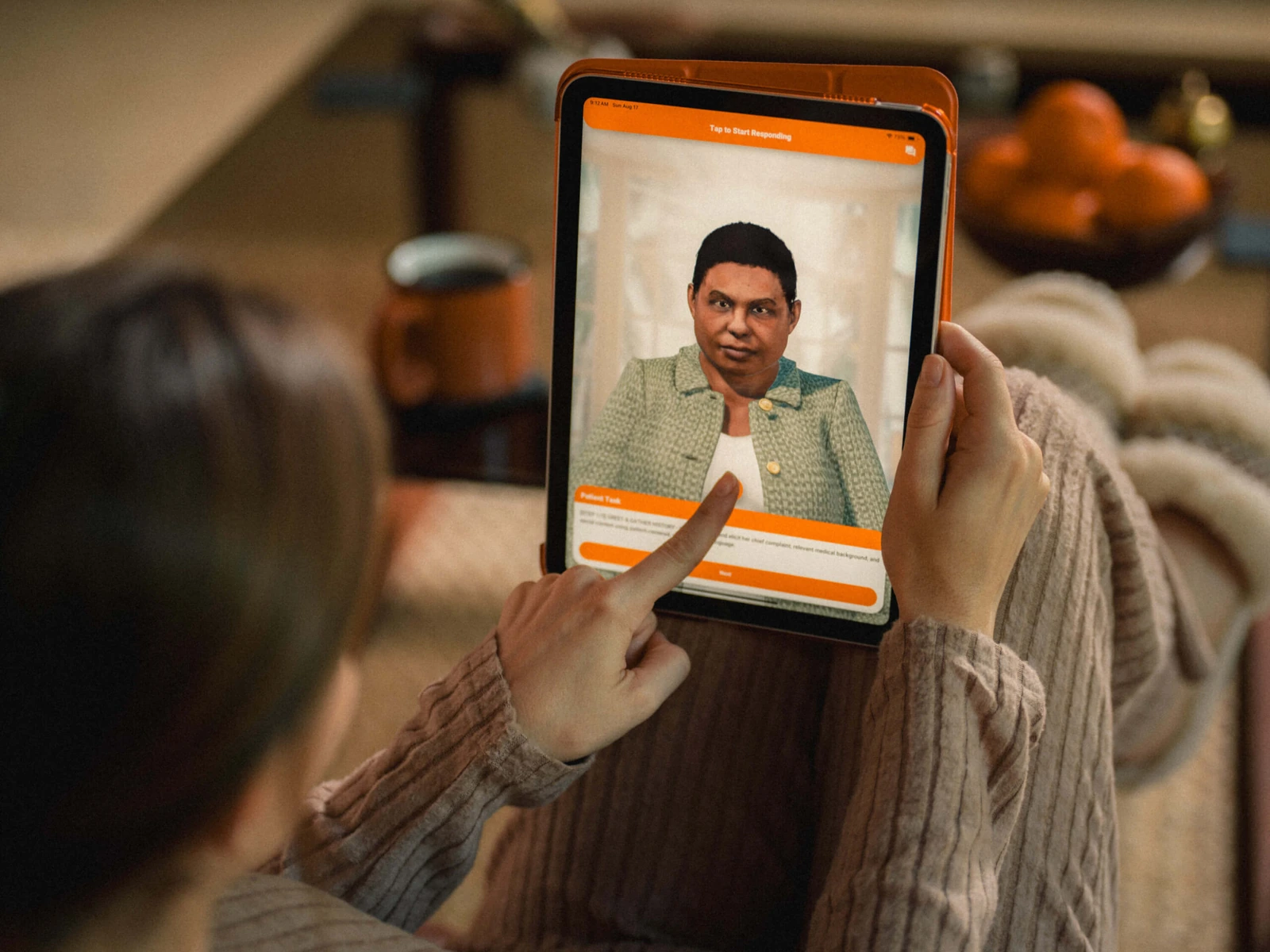
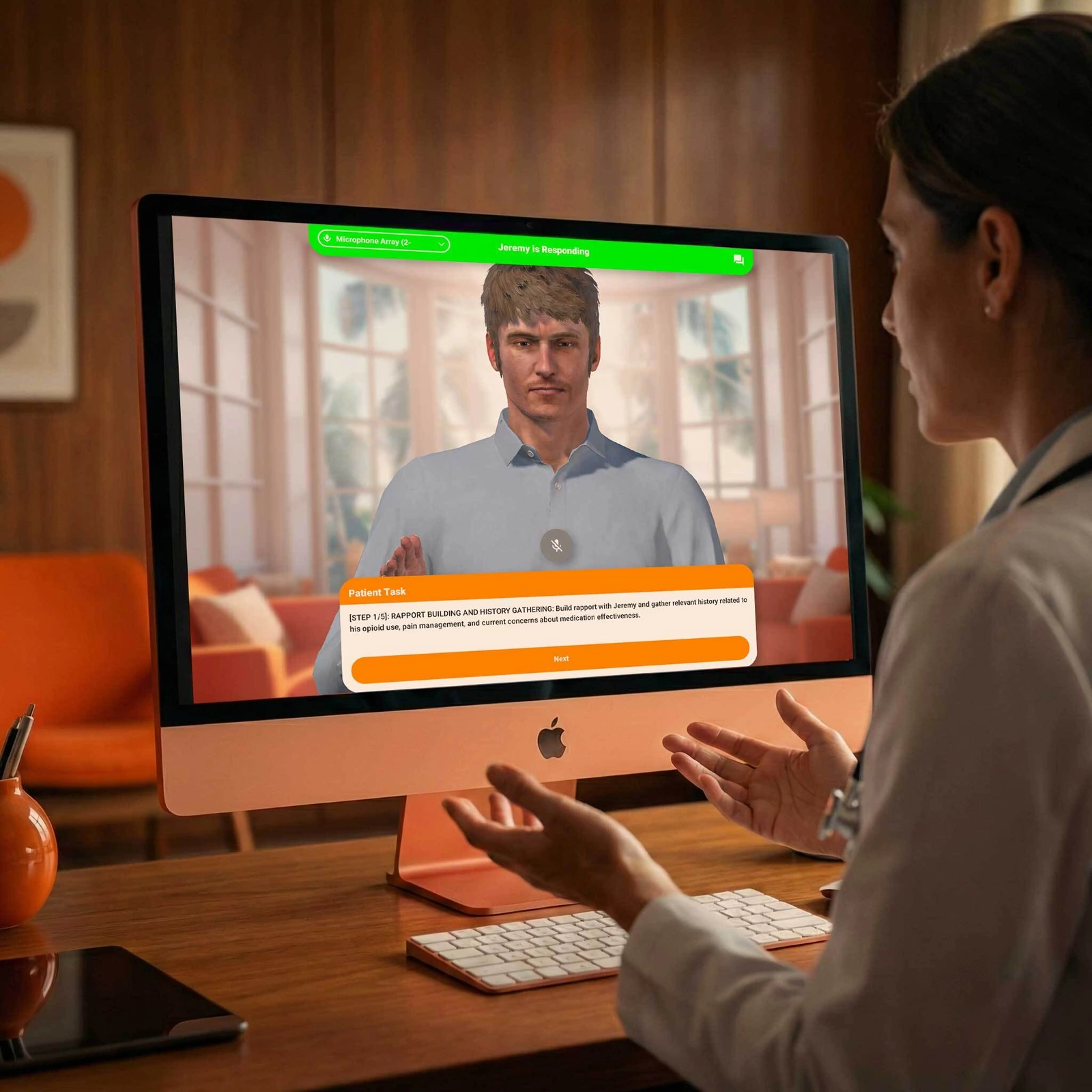
Practice the full consultation with Allie.
The challenge
A useful UTI consultation connects clinical reasoning with an understandable explanation and a clear next step. The program examined how learners brought these elements together in a simulated encounter.
The activity
Self-paced online education and live workshops used the same virtual-patient scenario. Pre/post assessments and task-level feedback provided different views of learning and performance.


Inside the encounter
Meet Allie.
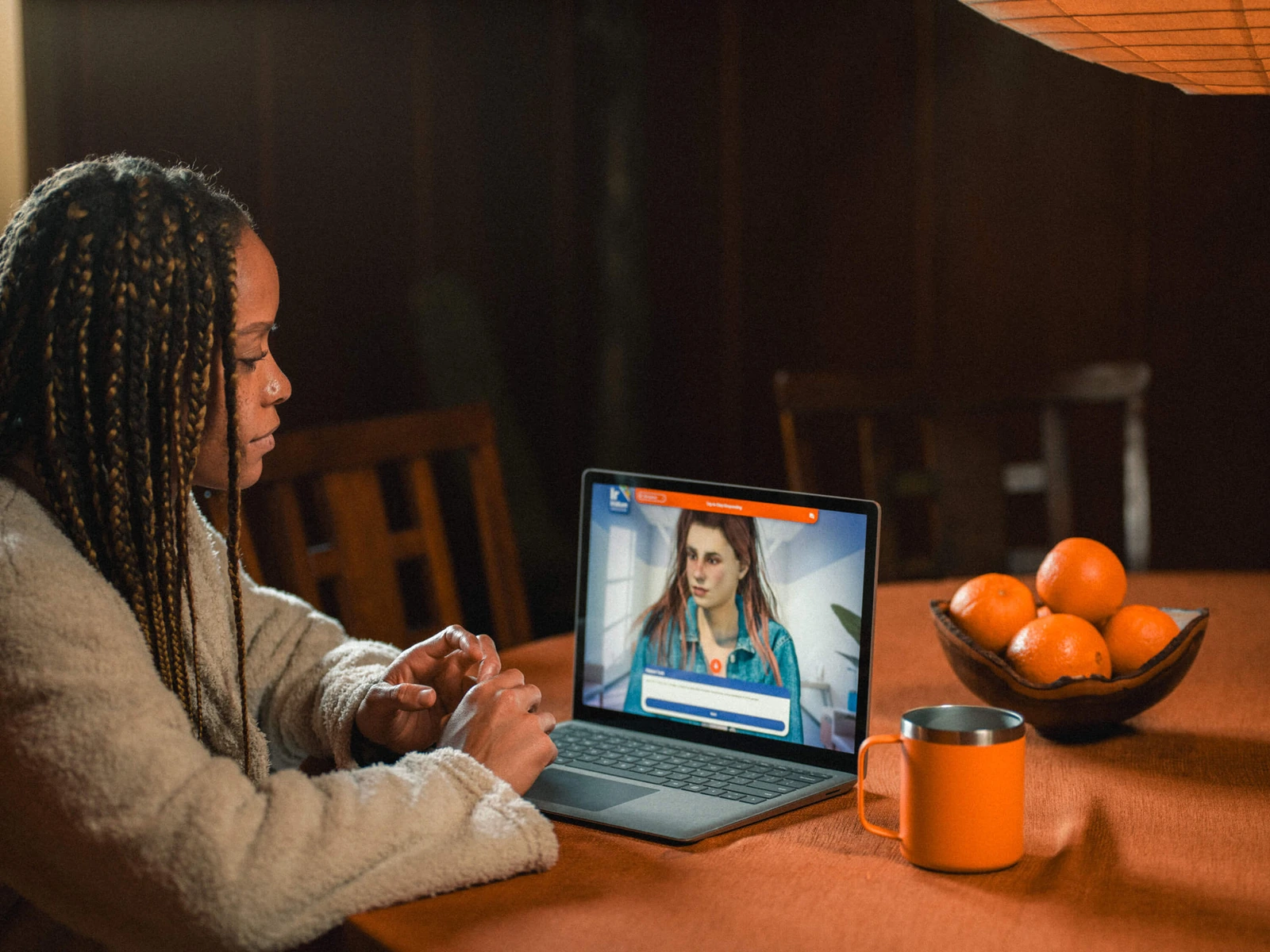
Learners meet a 23-year-old virtual patient reporting dysuria and urinary frequency. The encounter progresses from history and quality of life through evaluation, treatment discussion, education, and follow-up.
Understand the concern
Gather a history and explore how symptoms affect daily life.
Explain the reasoning
Discuss evaluation and the management approach.
Support understanding
Explain prevention, recurrence, and the purpose of the plan.
Plan the follow-up
Discuss monitoring and next steps, then review personalized feedback.
Results & insights
Look beyond the test score.
The report describes pre/post learning gains in both delivery formats. The simulated conversations also exposed areas needing more practice, especially treatment discussion and patient education.
Explore the full reportConversation scores in both formats
Mean scores for each task, on the same five-point scale.
- History
- Quality of life
- Diagnosis and evaluation
- Treatment discussion
- Patient education
- Follow-up
March–July 2025 interim report. The groups differed in professional background and experience, so this is a descriptive comparison, not a test of which format caused better performance. Scores describe simulated conversations, not prescribing behavior.
Treatment needs its own practice
Treatment discussion was the lowest-scoring task in both reported groups, identifying a specific focus for additional education.
Information is not understanding
The conversation analysis examined explanations of prevention, recurrence, and resistance, rather than assuming these topics were covered.
Context changes interpretation
The live group was more concentrated in experienced family-medicine physicians. Baseline differences matter when reading the two sets of results.
Study context
How to read
these results
How it was evaluated
The linked report summarizes an interim March–July 2025 evaluation of self-paced and live delivery, with the same six-task virtual encounter.
Knowledge and confidence assessments accompanied the activity. Simulation scores and conversation transcripts were also analyzed. The report’s cohort counts differ between sections, so this summary does not combine participant totals or present a pooled effect.
What this evaluation can tell us
The groups were not interchangeable: their professions and experience differed. Comparisons are descriptive, not a randomized test of delivery format.
Simulation performance and self-reported confidence do not demonstrate changes in prescribing, adherence, or patient health. These interim results should not be combined with differently dated program snapshots.
An Iridium education program supported by GSK.
The full case study
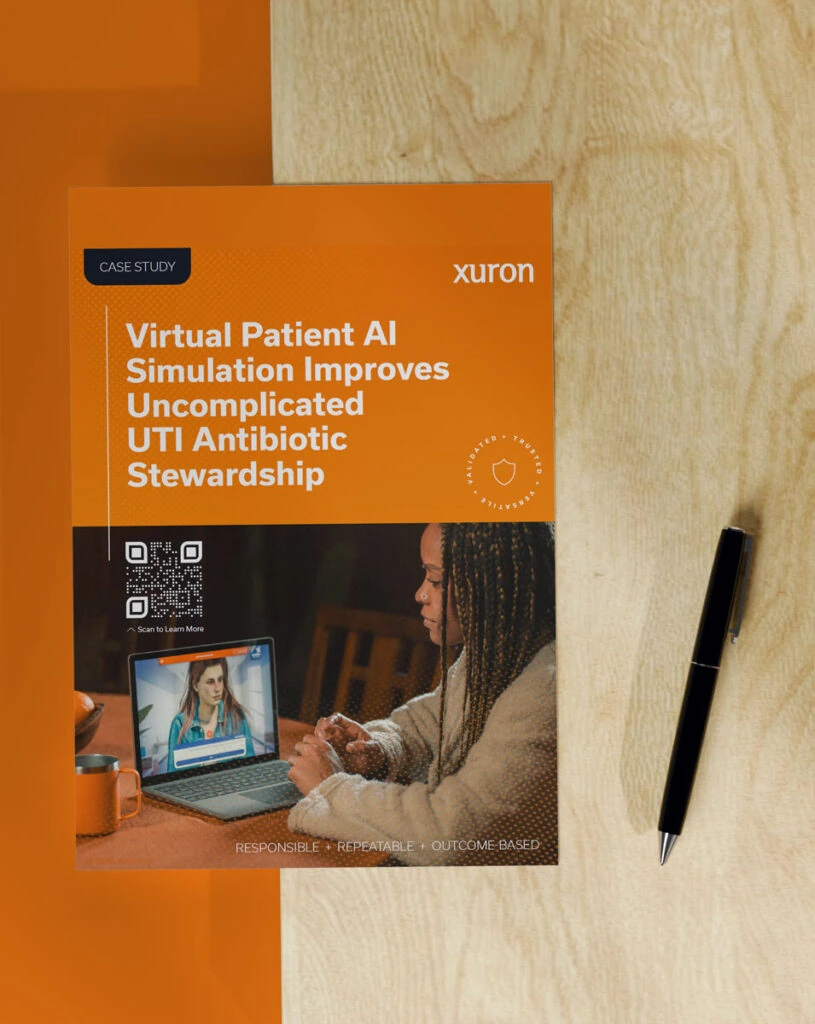
Read the full evaluation
The full report includes the study design, participant context, detailed measures, and findings.
Download case study PDF report