
Xuron and Music City PrEP Clinic Launch Nashville Partnership to Strengthen High-Stakes Patient Conversations
Xuron is partnering with Music City PrEP Clinic (MCPC) on a pilot program using AI virtual patients to help clinicians practice some of the most sensitive, high-impact conversations in sexual health, PrEP, and HIV care.
Both organizations are based in Nashville, which made the partnership a natural fit. MCPC is doing front-line prevention and care work across Tennessee and Kentucky. Xuron is building virtual human simulation tools that help clinicians practice difficult conversations before they happen with real patients.
Together, the goal is straightforward: give clinicians a safe, repeatable way to build confidence, consistency, and patient-centered communication skills in the moments that matter most.
About Music City PrEP Clinic
Music City PrEP Clinic was founded in 2017 as a sexual health and wellness clinic with a mission to help get to zero new HIV transmissions in Tennessee and Kentucky.
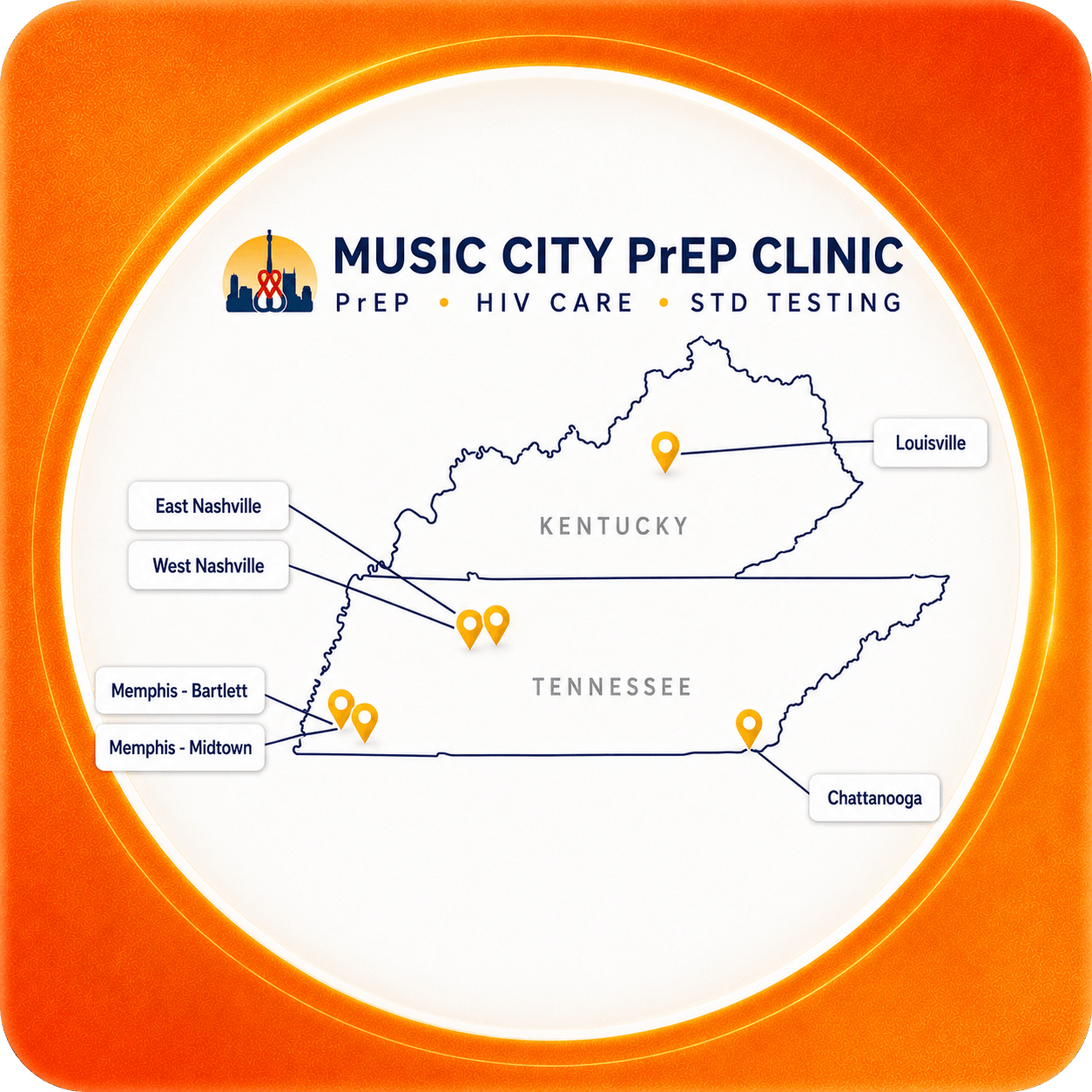
In less than a decade, MCPC has grown from a small Nashville start-up into one of the region’s leading PrEP and sexual health organizations, with clinics in Nashville, Memphis, Chattanooga, and Louisville, along with telemedicine access across both states.
MCPC provides PrEP, PEP, HIV care, STI testing and treatment, and related sexual health services with a focus on affordability, access, privacy, and stigma-free care.
Why AI Virtual Patient Simulation
Some clinical conversations cannot be fully prepared for through slides, protocols, or passive education alone.

A clinician may know the medicine but still need practice asking a detailed sexual history without judgment. They may understand STIs and PrEP clinically but need to navigate a patient’s mistrust, embarrassment, privacy concerns, or fear of cost. They may know the steps for delivering an HIV-positive diagnosis but still need to practice pacing the news, responding to emotion, and linking the patient to care without rushing past the human reality of the moment.
That is where simulation matters.
Xuron’s AI virtual patients give clinicians a protected practice environment where they can speak naturally, make decisions, respond to realistic patient concerns, and receive structured feedback afterward.
The point is not to replace clinical judgment. The point is to create a safe repetition before the real conversation.
How the Partnership Started
The partnership began after MCPC Executive Director and Co-Founder Rich MacKinnon connected with Xuron CEO Ian Nott at the Nashville Entrepreneur Center.
Sam Davidson, CEO of the EC:
“It was clear from my first meeting with Ian that he has what it takes to build a great company in Nashville. To that end, we at the EC have done what we do best: connecting founders with big ideas willing to work hard with the support systems to thrive. And that includes investors and advisors like Rich.”
From the beginning, MCPC had a clear sense of where simulation could help. The team identified several common, high-stakes encounters that their clinicians handle in real practice. These were not abstract training topics. They were conversations that happen regularly in PrEP and HIV care, where the quality of communication can affect trust, prevention decisions, adherence, linkage to care, and patient experience.
Those priorities became the foundation for the pilot.
The Three MCPC Courses
The pilot launched with three virtual patient courses, each built around a real-world clinical conversation.
1. Collecting a Detailed Sexual Health History

The first course focuses on sexual health history-taking and prevention planning.
Clinicians practice with Blake, a patient using intermittent PrEP who has had a recent missed-dose incident and a recent STI. The conversation requires clinicians to ask open-ended, nonjudgmental questions about partners, practices, protection patterns, adherence, and barriers to care.
The goal is to help clinicians move beyond surface-level screening and gather the kind of honest, complete information needed to support prevention planning.
2. PrEP Conversion

The second course focuses on turning a routine HIV-testing visit into an informed prevention conversation.
Clinicians practice with Andre, a college student who is skeptical about PrEP. He has concerns about cost, privacy, insurance, and whether PrEP is really meant for someone like him.
The goal is not to pressure the patient. The goal is to introduce PrEP with permission, correct misconceptions, respect autonomy, and co-create a harm-reduction plan that fits the patient’s life.
3. HIV-Positive Diagnosis Conversations

The third course focuses on delivering an HIV-positive diagnosis and linking the patient to care.
Clinicians practice with Alex, a patient receiving unexpected positive results while carrying deep fears about stigma, family impact, reputation, employment, and insurance.
The course asks clinicians to use an empathetic structure, pace the conversation to the patient’s emotional state, validate concerns, and outline a concrete path toward treatment and support.
What We Are Learning Early
The pilot is still underway, so Xuron and MCPC are not publishing full outcomes data yet.
However, early usage is already reinforcing why this kind of training matters. The simulations are surfacing the difference between knowing what to say in theory and practicing how to say it in a live, emotionally complex exchange.
Early feedback themes suggest opportunities around:
- Asking deeper follow-up questions during sexual health history-taking
- Exploring practical and psychological barriers to PrEP adherence
- Responding to skepticism without becoming overly directive
- Addressing cost, privacy, and insurance concerns clearly
- Slowing down during emotionally intense diagnosis conversations
- Moving from reassurance into concrete linkage-to-care planning
These are exactly the kinds of gaps simulation is designed to reveal: not as a punitive evaluation, but as a practical way to help clinicians improve before those moments happen with real patients.
How the Pilot Is Being Measured
The MCPC pilot is designed to look beyond completion alone.
Xuron captures structured feedback from each virtual patient encounter, including how clinicians perform against the learning objectives for each case. Over time, this will allow MCPC and Xuron to identify where clinicians are already strong, where additional support may be useful, and how repeated practice affects confidence and performance.
The goal is to build a clearer picture of communication skill development across the cohort while supporting MCPC’s broader onboarding and clinician development needs.
Why This Matters for MCPC
MCPC’s clinical work sits at the intersection of prevention, trust, stigma, behavior change, and access.
For patients, these conversations can be deeply personal. They may involve fear, shame, uncertainty, privacy concerns, family dynamics, insurance questions, or past experiences of judgment in healthcare.
For clinicians, the challenge is to combine clinical accuracy with empathy, clarity, and trust-building in real time.
Xuron gives MCPC a way to help every clinician practice those conversations in a consistent, scalable, and psychologically safe format.
A Foundation for Ongoing Training

The initial pilot focuses on three core MCPC conversation areas, but the partnership is also a foundation for future targeted training.
As MCPC continues to grow, virtual patient simulation can support onboarding, protocol alignment, communication practice, and targeted skill-building around new clinical priorities.
For Xuron, this partnership reflects the broader purpose of the platform: helping healthcare teams practice the moments where better conversations can lead to better care.
“What’s fascinating to me is that in this world of AI, we’re using an end-to-end AI solution to help unlock and empower some of the most human conversations imaginable,” said Ian Nott, CEO of Xuron.“It’s super exciting that we’ve been able to partner with a local institution that is serving Tennesseans and helping clinicians work through, in some cases, really extremely challenging conversations around sexual health, medication needs, and patient trust.”
“MCPC prides itself in giving patients the best healthcare experience they’ve ever had of any kind, “ says Richard MacKinnon.
“We do this by providing ‘great experiences by design’ and then thoroughly measuring and responding to patient feedback. Monthly Net Promoter Scores of 96+, confirm we’re on the right track! That said, the sensitive, confidential conversations that providers and patients have are behind closed doors, and we only hear about ‘less than great’ experiences after they have occurred, and then our Quality Assurance team has to play catch-up with what went wrong. AI-based patient roleplay helps us prevent problems by giving our provider team more practice with some of the touchiest topics in healthcare. This makes sense to me since we’re all about preventative healthcare.”
Looking Ahead
The next phase of the partnership will focus on completing the current clinician cohort, reviewing early learning themes, and identifying where simulation can best support MCPC’s evolving training needs.
If successful, the impact will be felt not only in course completions or feedback scores, but in the real patient conversations that follow.
One safe repetition before the real conversation.