Xuron and Music City PrEP Clinic Launch Nashville Partnership to Strengthen High-Stakes Patient Conversations

Xuron is partnering with Music City PrEP Clinic (MCPC) on a pilot program using AI virtual patients to help clinicians practice some of the most sensitive, high-impact conversations in sexual health, PrEP, and HIV care. Both organizations are based in Nashville, which made the partnership a natural fit. MCPC is doing front-line prevention and care […]
What Should an Avatar Look Like in Healthcare Training?

People keep asking a reasonable question. Should healthcare training avatars look more realistic? The research answer is messier than the sales answer. More realism can help. It can also backfire. The better question isn’t “how close can we get to a real person?” It’s “what level of realism helps the learner take the encounter seriously, […]
The Gap Between Knowing and Doing in OUD Care: Our Poster at ASAM 2026
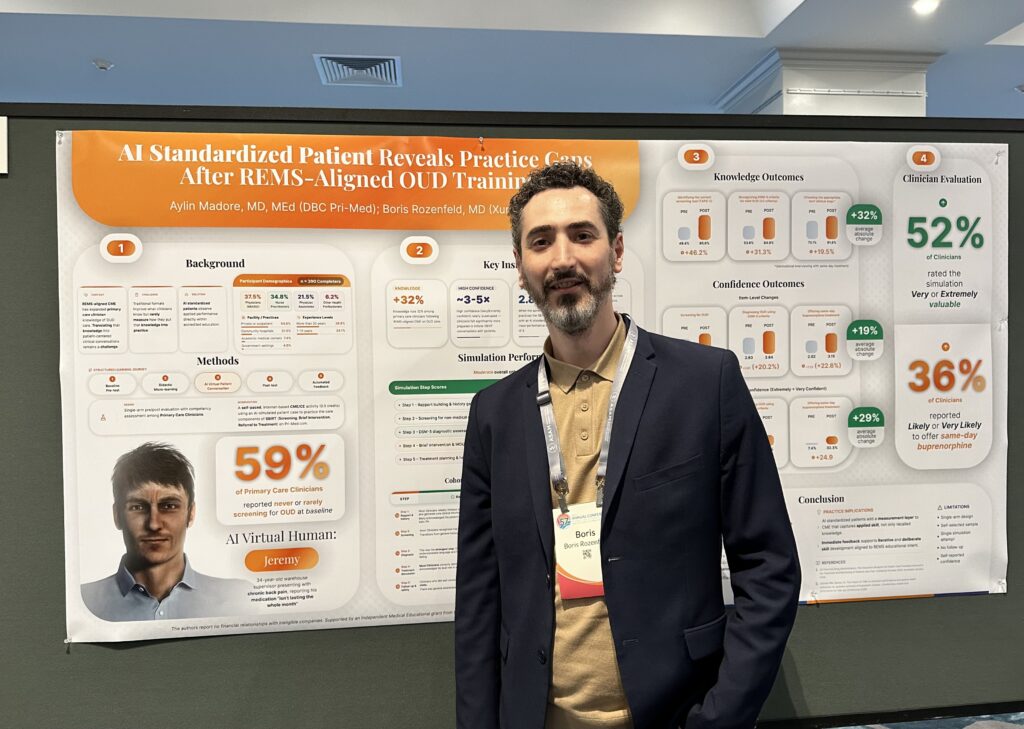
The American Society of Addiction Medicine (ASAM) accepted 180 posters for their 2026 annual conference in San Diego. Ours was one of them. Most of the program focused on clinical care, treatment access, policy, harm reduction, and special populations. Clinician education came up, but usually as a side note. Out of 180 posters, maybe five […]
AI Feedback Is Solving Medicine’s Oldest Teaching Problem

Medical education has a feedback problem. And we’ve known about it for 40 years. Back in 1983, Jack Ende wrote a paper that established feedback as essential for guiding learner performance.[1] He also explained why vague praise or delayed comments fail to change behavior. We’ve known this since Reagan was president. The solution seemed obvious: […]
Defeating the “Devil’s Drop”: How AI Can Save Medical Empathy

Medical students enter training with high empathy levels. Then something breaks. Research documents a significant drop in empathy during clinical years, precisely when students begin intensive patient contact. This “Devil’s Drop” is not a character flaw. It reflects a training system that fails to provide the repeated practice required to maintain these critical skills under stress.
AI-Enhanced Telehealth Communication Training

Telehealth is no longer an experiment or a stopgap. It is a stable part of how care is delivered across medicine, nursing, advanced practice, and allied health. As that shift has settled in, a quiet realization has followed: remote care is not simply in-person care delivered through a screen or a phone. It is a different clinical interaction, with different communication constraints, safety risks, and equity considerations
From Mrs. Chase to ChatGPT: How AI Is Revolutionizing Nursing Communication Training
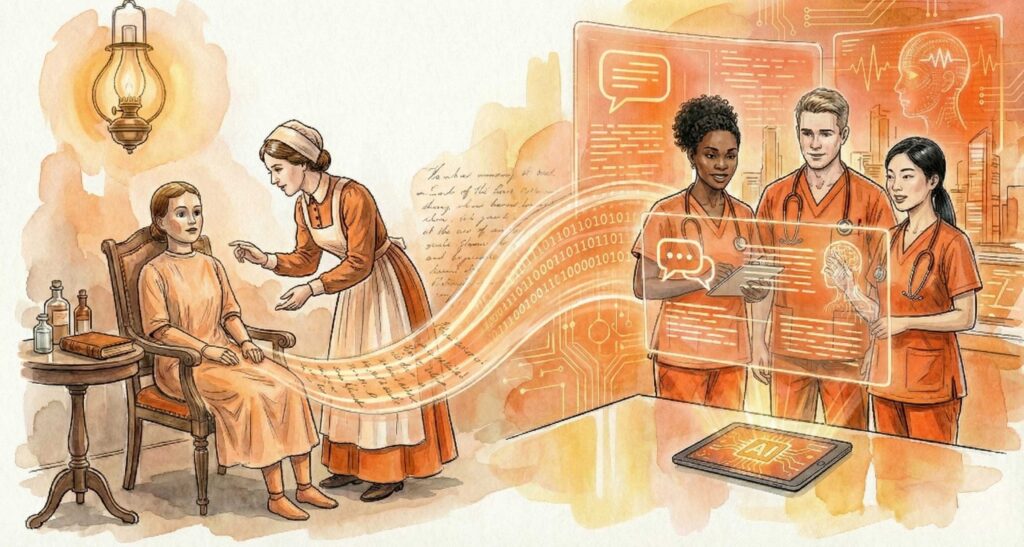
Nursing schools have faced a perfect storm of challenges over the past five years. Clinical placement sites are harder to find. Qualified faculty are in short supply. And the COVID-19 pandemic forced a massive shift to remote learning that exposed the limitations of traditional teaching methods [1]. But out of this crisis has emerged an unexpected solution: artificial intelligence.
The Dialogue Problem Is Finally Solved: How AI Made Virtual Patients Work After 50 Years of Trying

During my medical school training, standardized patients were invaluable. Real actors portraying patients with specific conditions gave us a safe space to practice clinical skills before facing real patients. But we only got to practice each scenario once. I was nervous beforehand, nervous during the encounter, and if I missed something critical or fumbled the conversation, that was it—no chance to try again until the next scheduled session, if there was one.
New Publication: Multi-Course Evaluation in the Alliance Almanac

Xuron just published some of our findings in the Alliance Almanac, demonstrating how AI-powered virtual humans can rapidly strengthen communication skills in healthcare.
3LS Ventures Invests in Xuron to Drive Innovation in Healthcare with AI-Powered Solutions

3LS Ventures Inc., a leading early-stage investor specializing in behavioral health solutions, is proud to announce its strategic investment in Xuron, an innovative healthcare technology company that provides a virtual, intelligent provider training aimed at simulating the patient experience. This partnership demonstrates 3LS Ventures’ unwavering commitment to accelerating advancements in healthcare through technology and innovation.